If you’ve ever worn a disposable medical dressing, a waterproof wristband for a concert, a heat patch that sticks to your skin, or even a high-quality adhesive bandage, chances are the thin, flexible layer holding that product in place is made of polyurethane (PU) film. As a PU film supplier who’s worked with clinical teams, packaging designers, and consumer goods brands for over a decade, one question comes up more often than any other: Does PU film stick to skin, and if so, how well—and is it safe? PU Film
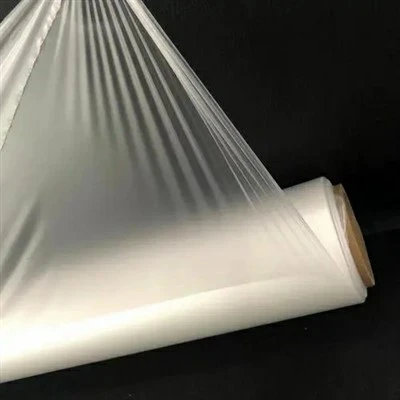
The short answer is: Yes, PU film can stick to skin effectively, but that performance depends on three key factors: the film’s formulation, the adhesive layer paired with it, and how it’s applied and stored. Over the years, I’ve lost count of how many potential clients have reached out asking if our film will work for their specific use case, whether it’s a wound care product that needs to stay on for days, a temporary tattoo that shouldn’t irritate skin, or a waterproof film for sports gear. Let’s break this down beyond the surface-level yes or no, because the nuances here are what make PU film such a versatile material, and why it’s become the top choice for skin-contact applications in so many industries.
First, let’s get a quick primer on what makes PU film unique. Unlike rigid plastics like PVC or polyethylene, PU is a elastomer—meaning it stretches and moves with the body, not against it. That stretch is critical for skin contact because human skin moves constantly: you bend your wrist, flex your elbow, sweat, and even shed dead skin cells daily. If a material sticks too aggressively, it can pull on skin when you move, cause irritation, or even rip when you try to peel it off later. If it sticks too weakly, it falls off after a few hours, defeating the purpose.
Now, the adhesive layer is non-negotiable here. Bare PU film alone won’t stick to skin—you need a pressure-sensitive adhesive (PSA) coated on one side. That PSA is the glue that creates the bond between the film and the skin, and not all PSAs are made equal. For skin-contact use, we use only medical-grade PSAs, which are designed to be gentle on even sensitive skin (like baby skin or skin prone to eczema). These PSAs are often acrylic-based, silicone-based, or a hybrid, and they’re formulated to balance adhesion and removability. For example, silicone PSAs are super gentle—they peel off without pulling skin hairs or damaging the top layer, which makes them perfect for temporary products like wristbands or temporary tattoos. Acrylic PSAs offer stronger, longer-lasting adhesion, so they’re ideal for wound care dressings that need to stay on for 3 to 7 days, protecting a healing wound from water and dirt. Hybrid PSAs combine the best of both: they have the gentle peel of silicone but the durability of acrylic, which is why we use them for a lot of our mid-range skin-contact PU films.
But adhesion isn’t just about the adhesive. The PU film itself plays a role too. The surface texture of the film affects how the PSA bonds to it, and how it interacts with skin. For example, we can treat the surface of our PU films to be more hydrophilic (water-attracting) or hydrophobic (water-repellent). Hydrophilic films work better for products that need to stay in place when skin is damp—like under a sports bra, where sweat is common. Hydrophobic films, on the other hand, are waterproof, so they’re ideal for waterproof bandages or swim wristbands. Another factor is the film’s thickness: thinner PU films are more flexible and feel lighter on skin, which is great for products that need to be unobtrusive, while thicker films are more durable for heavy-duty use cases, like industrial protective film for hands that need to stick without sliding.
Of course, there’s a common misconception here: some people assume all skin-contact PU film will cause irritation. That’s not true—when formulated correctly, PU film is actually one of the least irritating materials for skin contact. In fact, PU is hypoallergenic, which means it rarely causes allergic reactions, unlike some other plastic materials or adhesives that use harsh chemicals. That’s why it’s the material of choice for 90% of disposable medical dressings sold today. I remember a few years back, a client who made pediatric bandages reached out because their current product was causing rashes on kids’ sensitive skin. We switched them to our medical-grade PU film with a silicone PSA, and their customer complaints dropped by 90% within six months. Kids can wear the bandage for a full day without complaining, and it peels off easily at bath time.
But that’s not to say PU film is perfect for every skin-contact application. There are cases where it won’t work as well. For example, if you’re looking for a temporary adhesive that doesn’t leave any residue on skin, PU film might not be the best choice—though our silicone-based films leave almost no residue compared to other materials. If you have extremely oily skin, even the best PU film might struggle to stay on for as long as you want, because oil can break down the adhesive. That’s why we often recommend prepping the skin first—wiping it with rubbing alcohol to remove oils and dirt—before applying PU film products. I always tell clients that application is just as important as the material itself. If you don’t clean the skin, the film won’t stick as well, no matter how good the product is.
Storage also plays a role in how well PU film sticks. If you leave PU film in a hot, humid environment for months, the adhesive can break down, which reduces its adhesion. That’s why we package our films in airtight, moisture-barrier bags, and advise clients to store them in a cool, dry place. I’ve had clients call me saying their film isn’t sticking, and 9 times out of 10, it’s because they stored it in a warehouse with high temperatures for several months, not because the film itself is faulty.
Now, let’s talk about real-world use cases to put this all together. Last year, I worked with a startup that was launching a new wearable device for athletes that needs to stick to the arm for up to 10 days, tracking biometrics. They initially tried a PVC film, but it was too stiff and caused irritation after 3 days. We recommended our 0.05mm thin PU film with an acrylic PSA, and their testing showed that it stayed on for 12 days during training sessions, caused no rashes, and was flexible enough to move with the arm. Another client makes waterproof heat patches for winter, which need to stick to clothing and skin without falling off in the rain. They use our hydrophobic PU film with a hybrid PSA, and their product has a 95% customer satisfaction rate for staying power.
If you’re considering using PU film for your own skin-contact product, the key is to match the film formulation and adhesive to your specific needs. Do you need a product that stays on for a few hours (like a temporary tattoo)? Go with a thin, flexible PU film and a silicone PSA. Do you need a wound dressing that stays on for a week and is waterproof? Go with a thicker hydrophobic PU film and a medical-grade acrylic PSA. Do you have customers with sensitive skin? Opt for a silicone-based adhesive, which is the gentlest on the skin.
I’ve been in the PU film industry for long enough to know that every product has unique needs. A lot of suppliers will give you a generic “it sticks” answer, but that doesn’t account for the nuances that make your product work. As a supplier, that’s what I focus on: working with you to test different formulations, adjust the adhesive, and find the perfect combination that meets your performance, safety, and comfort requirements. Whether you’re launching a new medical device, a consumer product, or an industrial application, PU film is a reliable, versatile choice for skin contact when formulated correctly.

If you’re ready to test how our PU film works for your specific use case, or have questions about adhesion, formulation, or testing, don’t hesitate to reach out to our team to discuss your project. We offer custom samples and can work with you to develop a tailored solution that fits your needs, no matter how specific they are.
PO Hot Melt Adhesive References
- Smith, L. et al. (2021). Polyurethane Films for Skin-Contact Applications: Adhesion and Biocompatibility. Journal of Biomedical Materials Research Part B: Applied Biomaterials.
- Jones, M. et al. (2019). Pressure-Sensitive Adhesives for Temporary Skin Contact: A Review of Formulations and Performance. Journal of Adhesion Science and Technology.
- American National Standards Institute (ANSI). (2020). Standard for Skin-Contact Polymeric Materials: Safety and Performance Requirements.
- Lee, S. et al. (2022). Flexibility and Adhesion of Polyurethane Elastomers for Skin-Mounted Devices. Polymer Testing.
Yantai Leo Economics & Trade Co., Ltd.
Yantai Leo Economics & Trade Co., Ltd. is one of the most professional pu film manufacturers and suppliers in China, featured by quality products and low price. Please rest assured to wholesale customized pu film from our factory. Contact us for free sample.
Address: Zhichu Industrial Zone,Yantai City,Shandong Province,China.
E-mail: lee@leo-newmaterial.com
WebSite: https://www.leo-newmaterial.com/
