If you’ve ever stopped to window-shop for pet accessories at a local pet store, or scrolled through Instagram reels of tiny pups in flowery bandanas and big dogs in plaid, you’ve probably asked this: How much do pet bandanas actually cost? As someone who’s spent the last 7 years running a small, family-owned pet bandana supply business, I’ve sat through hundreds of conversations with boutique pet shop owners, online pet brand managers, and even fellow small business owners who’re just getting their paws wet in the pet accessory space. Most of the time, the answer isn’t a flat number—it depends on a dozen small, easy-to-overlook details that separate a $5 fast-fashion bandana from a $18 made-to-order one. Let’s break this down, from the factory floor to the front window, so you know exactly where your money goes when you stock bandanas for your customers. Pet Bandana
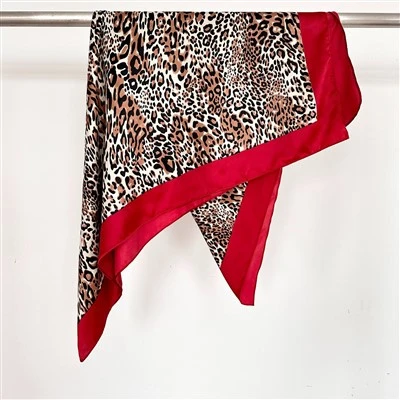
First, let’s talk about material costs, because that’s the biggest line item for any bandana supplier. Back when I first started out, I made all my bandanas from a 100% cotton canvas that cost $2.15 per yard. That was for a plain, solid-colored bandana—no patterns, no extra stitching, just a simple triangle cut and hemmed. Today, that same plain canvas is $2.70 per yard, and that’s before any pattern prints or specialty fabrics. If you’re a shop owner ordering solid-colored bandanas in bulk, you’re looking at a cost per unit (what we call “cost of goods” or COGS) between $1.80 and $2.40. But if you want printed bandanas—say, a sunflower print for summer, or a holiday paw print for Christmas—there’s an extra layer here. Digital printing, which is what most small suppliers use for small runs (think 50 to 500 units at a time), adds about $0.60 to $1.20 per bandana, depending on how many colors are in the design. A simple two-color paw print is cheaper than a 12-color floral pattern, so that shifts the cost a little.
Then there are specialty fabrics, which are a huge part of why some bandanas cost more. If you’re carrying water-resistant bandanas for dogs who love to swim, or eco-friendly bandanas made from recycled polyester, those materials cost almost twice as much as regular cotton. I recently sourced a recycled plastic fabric for a summer line of bandanas, and that cost $4.50 per yard, so each bandana’s material cost jumped to $3.10. There’s also fleece for winter bandanas, which adds even more because it’s thicker and takes longer to cut and sew. For us, these specialty options make up about 20% of our product line, and they command a higher price point because they solve a specific problem for pet owners—no one wants a soggy bandana after a walk in the rain, or a scratchy one on a cold day.
Next, labor and production time. This is where a lot of buyers underestimate the cost of pet bandanas. A lot of people think it’s just cutting a triangle out of fabric and sewing a hem, but there’s way more that goes into it. For example, if you offer adjustable bandanas with hook-and-loop closures instead of just a tie, you’re adding hardware, which costs $0.15 to $0.30 per bandana. If you size them for different dogs—small for Chihuahuas, medium for Beagles, large for Great Danes—you have to cut three different sizes for each design, which means more fabric waste and more production time. A simple solid-colored bandana takes about 2 minutes to cut and sew, so a factory or sewing studio can make 30 of those an hour. A printed bandana or an adjustable one takes 3 to 4 minutes, so only 15 to 20 an hour. In the U.S., where we work with local seamstresses instead of overseas factories, labor is about $15 an hour, so that means the labor cost per simple bandana is about $0.50, and for the more complex ones, it’s $1.00. If you’re working with an overseas manufacturer, labor is cheaper, about $0.20 to $0.30 per unit, but you have to add shipping, import taxes, and the risk of longer lead times, which a lot of small shop owners don’t account for.
Then there’s overhead, which is the stuff that doesn’t go directly into making each bandana, but still has to be paid for. For me, that includes rent for my small warehouse space, shipping supplies, website costs, and the time I spend talking to customers and designing new products. Overhead adds about $0.30 to $0.50 per bandana, depending on how many units I’m making. If I make 500 bandanas in a month, overhead per unit is lower than if I only make 100. That’s why bulk orders get a better per-unit price—because the overhead is spread out over more products. A lot of new shop owners will try to get a $1 per unit bandana, but they don’t realize that if a supplier’s COGS is $1.80, there’s no way they can make a profit on that, and it’ll only lead to rushed production or lower quality.
Now, let’s put all that together to get real, actual cost numbers for different types of bandanas, from a supplier’s perspective. Let’s start with the basic, plain solid cotton bandana, tie-style, one size fits most (well, sort of—we do note that it fits up to a 20-inch neck). For bulk orders of 500 units, that’s $1.80 in materials, $0.50 in labor, $0.30 in overhead, so total COGS is $2.60 per bandana. Then, as a supplier, I have to add a markup to cover things like insurance, taxes, and my own profit, which is standard 40% to 50% for small accessory suppliers. So that means I sell that plain bandana to a shop owner for $4.30 to $4.60 each. That same bandana in a printed design adds $0.80, so COGS is $3.40, sold to shops for $5.80 to $6.10.
Now for the mid-range bandanas, which are the ones I see most shop owners asking about. These are usually cotton, printed, with a tie, and available in three sizes (small, medium, large) for different dog breeds. For bulk orders of 250 units (which is a common starter order for shops), materials are $2.20, labor is $0.70 (since we have three sizes), overhead is $0.40, so COGS is $3.30, sold to shops for $5.50 to $5.80. Add an adjustable hook-and-loop closure, and that adds $0.20 to materials, so COGS goes to $3.50, sold for $5.80 to $6.10.
Then there are the premium bandanas, the ones that higher-end pet shops carry, often for specialty events or eco-conscious customers. These are made from recycled polyester, water-resistant, printed with detailed designs (like custom logos for pet businesses, or high-resolution nature prints), and have adjustable closures. For bulk orders of 100 units, materials are $3.10, labor is $1.00, overhead is $0.50, so COGS is $4.60, sold to shops for $7.70 to $8.10. If a shop wants custom designs, where they send their own artwork, that adds another $1.20 to $1.50 per bandana, because we have to do a test print, adjust the design, and make sure it turns out right, so those sell for $9.50 to $10.50 each.
Wait, but I know what some of you are thinking—why do some big box stores sell bandanas for $3 each? That’s where the overseas factory angle comes in. Those bandanas are usually made from cheap, thin polyester, printed with low-quality ink, and cut in bulk from 100-yard rolls, so materials cost $0.40, labor is $0.10, overhead is $0.05, so COGS is $0.55, sold to the big box store for $1 each, and they mark it up to $3. But the tradeoff is that those bandanas fade after a few washes, fray easily, and sizing is all over the place—one size might fit a 10-pound dog, another a 50-pound dog. For small boutique shops, that kind of low-quality product will hurt their reputation, because their customers will buy a $3 bandana, it falls apart in a month, and they’ll blame the shop, not the supplier. That’s why most small shop owners come to me, not because my bandanas are more expensive, but because they’re consistent, last for months, and their customers know they’re getting a good product.
I also want to talk about hidden costs that a lot of new shop owners don’t consider when they’re pricing bandanas. For example, if you have a return policy, and a customer sends back a bandana because the size was wrong, that’s a cost for you, and it’s also a cost for me as a supplier if we sent the wrong size. If you want to offer custom bandanas for a local pet event, that’s a minimum order quantity, usually 50 units, which adds up. And shipping—if you order 100 bandanas, shipping to your shop is $25, so that’s $0.25 per unit you have to cover, which again, adds to the total cost.
Now, let’s get to the part you’ve been waiting for: how does all this translate to what a retail customer pays? If a shop buys a bandana from me for $5.50, they’ll mark it up 100% to make a profit, so they sell it for $11. A premium bandana that I sell for $8 will sell for $16 in a shop. That makes sense, right? They have to pay rent, utilities, employees, and all the other costs of running a retail store. If a shop sold a bandana for $5, they’d be losing money on it. I’ve seen too many small shops try to undercut each other on price, and it only leads to them carrying lower-quality products, and eventually closing because they can’t make enough profit to stay in business.
So what should you look for when you’re choosing a pet bandana supplier? First, ask for the COGS breakdown, or at least ask how much they pay for materials and labor. A reputable supplier will be transparent about that, not just give you a random number. Second, ask about minimum order quantities. A lot of small suppliers like me have a minimum order of 50 units, which is manageable for a new shop, whereas some big suppliers want 500 or 1000 units upfront. Third, ask about lead times—how long it takes to get your order. If someone says they can ship in 2 days, that’s usually a sign they have pre-made inventory, which is great for quick orders, but if you want a custom design, it’s going to take 2 to 3 weeks to print and sew.
Over the years, I’ve built relationships with dozens of small pet shop owners, and most of them tell me that their customers are willing to pay $10 to $15 for a good quality bandana, because it’s an accessory that their pet will wear every day, not just a one-off toy. They’d rather spend a little more on a bandana that doesn’t fray, fits their dog perfectly, and has a design that matches their pet’s personality, than buy a cheap one that falls apart in a week. That’s why I focus on making bandanas that are durable, come in sizes for every dog from teacup Yorkies to Great Danes, and have designs that change with the seasons—think pumpkin prints in fall, snowflake prints in winter, and palm tree prints in summer.
If you’re a pet shop owner, or a brand manager looking to stock pet bandanas, and you want a supplier that’s transparent about costs, offers customizable designs, and stands behind their products, feel free to reach out. I can send you a sample of any of our bandanas, break down the pricing for different order sizes, and even work with you to create custom designs for your shop’s brand.
Tie-dye Scarf References:
Pet Industry Association of America. (2023). U.S. Pet Accessories Market Report: Material Costs and Pricing Trends.
American Pet Products Association. (2022). Small Business Guide to Pet Accessory Manufacturing and Pricing.
National Sewing Association. (2023). Labor and Overhead Costs for Small Batch Apparel and Accessory Production.
Eco-Friendly Textile Association. (2022). Cost Comparison of Sustainable vs. Conventional Fabrics for Pet Products.
Deqing Boliya Silk Co., Ltd.
Deqing Boliya Silk Co., Ltd. is one of the most professional pet bandana manufacturers and suppliers in China, featured by quality products and good service. Please rest assured to wholesale the newest pet bandana in stock here and get quotation from our factory. We also accept customized orders.
Address: Baibiao Industrial Zone, Xinshi Town, Deqing County, Zhejiang Province, China
E-mail: boliya@boliyasilk.com
WebSite: https://www.boliyasilk.com/
