If you’re here, chances are you either just got your first portable lathe from us, or you’ve been hauling one around job sites for years—either way, I’m guessing you’ve either already had a close call or heard a wild story from a buddy who did. Portable lathes are game-changers, right? We built our business on making these bad boys tough enough to take the beating of job sites, shipyards, oil fields, and remote repair shops, but here’s the thing: even the most reliable portable lathe isn’t worth a scraped hand, a knocked-out tool, or worse if you cut corners on safety. I’ve been selling these things for 7 years, worked alongside every type of operator, seen way too many mistakes that could’ve been avoided, and today I’m spilling the real safety tips no generic “operator’s manual” will tell you—stuff that’s specific to using portable lathes out in the field, not just in a controlled shop. Portable Lathe

First off, let’s talk pre-use checks—this isn’t the 2-minute “plug it in and go” routine you might be tempted to do when you’re on a tight deadline. Portable lathes aren’t fixed to a heavy, immovable bed like shop lathes; they’re clamped to whatever workpiece you’re working on (a rusted pump shaft, a marine prop, a mill roll) so every little thing can throw off balance. Last year, a customer in Texas called me panicking because his lathe slipped mid-cut, nicked his forearm so bad he had to get stitches. Turned out he skipped the pre-check, didn’t tighten the mounting clamps enough, and forgot to tighten the lead screw nut. Dumb, right? But it’s so easy to rush. Here’s what we swear by: first, do a visual scan of the entire lathe—check for frayed power cords, loose or missing bolts, worn feed rods, cracked jaws on the chuck. Even a tiny crack in the chuck can make a tool bit fly, which is a top cause of field lathe injuries. Then, test the emergency stop button—hit it mid-spin to make sure it cuts power instantly, don’t just assume it works because you pressed it once last week. And super important: make sure your power source is compatible. Most portable lathes run on 110V or 220V, not a random generator that’s underpowered or has dirty power. We include a little voltage tester in every unit we ship, use it—burning out the motor is a hassle, but a power surge that makes the lathe lurch is a danger. Another thing: if your lathe has a gas or hydraulic option (we have a few heavy-duty models for industrial work), test those lines for leaks before you turn it on. A gas leak near a spinning metal tool? Not a good day.
Next up: personal protective equipment (PPE), and no, that’s not just the safety glasses you grabbed from the parts bin when you left the house. I see it all the time: guys showing up to a job in a t-shirt with rolled sleeves, work boots with no steel toe, no hearing protection because “the lathe’s not that loud”. Let’s break this down for field work specifically. First, eye and face protection: ANSI Z87.1 rated safety glasses at minimum, but if you’re cutting metal at high speeds (over 1000 RPM), add a face shield. Shavings (called swarf, by the way) go flying, and they’re not like wood chips—they’re hot, sharp, and can pierce regular glasses. I had a customer in the Gulf of Mexico a few years ago tell me a shard of metal bounced off his regular glasses and grazed his eyebrow; he was lucky it didn’t hit his eye. Then hearing protection: even the smaller portable lathes hit 85 dB, and the heavy-duty ones can hit 100+—that’s enough to cause permanent hearing loss in hours of exposure. Earplugs are fine, but earmuffs are better if you’re running it all day. Hand protection: not regular work gloves! Leather gloves are fine for handling the workpiece or lathe when it’s off, but never wear cotton or synthetic gloves when the lathe is spinning—they can catch on the chuck or tool holder, wrap around your hand in a second, and pull you into the machine. I’ve seen that happen, it’s terrifying. Steel-toe boots? Non-negotiable. A 20-pound chuck falling off the lathe stand or a heavy workpiece sliding off the table will ruin your work day (and your toes) way faster than a lost work boot. And what about clothing? No loose sleeves, no hoodies with drawstrings, no necklaces, no wristwatches—anything that can hang and catch on a moving part. I saw a guy last month who forgot to roll his flannel sleeves up, and his cuff got caught on the tool post; he only stopped the lathe by hitting the emergency stop, but he tore his shirt arm and got a nasty bruise. Don’t be that guy.
Now, the big one: mounting the lathe correctly. This is where so many people mess up, because portable lathes are supposed to be adaptable, not one-size-fits-all. Shop lathes are bolted to the floor, so they don’t move—portable ones depend on you securing them to the workpiece and a stable base. First, never mount a lathe to a workpiece that’s not clamped down tight itself. If you’re working on a pump shaft, the shaft should be secured in its housing, not just resting on two sawhorses. If it’s a marine prop, make sure the boat is on a solid lift, not a trailer that can shift. We always tell customers: test the stability before you turn the lathe on. Grab the headstock and try to wiggle it back and forth—if there’s any play, you need more clamps. Most portable lathes come with heavy-duty mounting brackets, use all of them, don’t skip even one because you think it will be “fine”. Another mistake: mounting the lathe so it’s off-center on the workpiece. If the headstock is tilted even a fraction, the workpiece will wobble during the cut, which can throw the tool bit, or even cause the entire lathe to shift when it’s spinning at high speed. We give a quick alignment tool with every unit—use it to make sure the headstock and tailstock are perfectly in line with the workpiece. And for the base of the lathe? Never set it on soft ground, plastic pallets, or uneven surfaces. If you’re working at a remote site, bring heavy steel stands or cinder blocks to level the lathe base. I’ve had a customer in Alaska mount his lathe on snow blocks (stupid, I know) and when he turned it on, the snow melted, the lathe tilted, and he totaled a $5,000 prop. Not worth it.
Then there’s operating procedure itself—stuff that seems like common sense, but when you’re tired after a 12-hour day, it’s easy to cut corners. First, always start with the lowest possible RPM for your first pass. If you jump straight to high speed, the swarf will go flying everywhere, the tool bit can break, and the lathe might lurch. Do a test cut on a small section of the workpiece to make sure everything is aligned, then adjust speed and feed rate as needed. And never leave the lathe unattended while it’s running. I can’t stress this enough. I get calls all the time from customers who ran to get a coffee or help a coworker, and came back to a broken tool, a damaged workpiece, or even a small fire from overheated swarf. If you have to step away, turn the lathe off, unplug it (or shut off the gas/hydraulic line), and put a note on the control panel telling someone it’s off. Another thing: tool bit maintenance. A dull tool bit will cause the lathe to work harder, which can lead to slippage or burnout. Inspect your tool bits before every use, and sharpen or replace them when they show signs of wear. Also, always use the correct tool bit for the material you’re cutting—we have a guide on our site for that, so don’t just grab whatever bit you have lying around. If you’re cutting stainless steel, a high-speed steel bit won’t last, and it can chip and fly.
Wait, what about swarf management? That’s a big one I almost forgot. Hot metal shavings aren’t just sharp—they can start small fires if they land on wood, rags, or flammable materials. Keep a fire extinguisher (Class B, for flammable liquids, but regular ABC works too) within 10 feet of the lathe at all times. Also, have a metal bin or a bucket with water nearby to collect swarf—don’t let it pile up on the ground or the lathe base. And never use compressed air to blow swarf off the lathe or workpiece—this just sends shards flying everywhere, right into your face or a coworker’s. Use a brush or a vacuum designed for metal swarf.
Oh, and one last thing for when you’re done: post-operation safety. Turn the lathe off, disconnect the power (or shut off the hydraulic line), wait for all moving parts to stop completely before you touch anything. Don’t try to clear swarf while the lathe is spinning—you’ll lose a finger. Once everything is off, clean the lathe and the surrounding area, put all tools and bits away, and do a quick check for any loose bolts or parts before you pack it up. I can’t tell you how many times I’ve had a customer call me a week later saying their chuck came loose mid-job, and it’s because they skipped the final check after the last job.
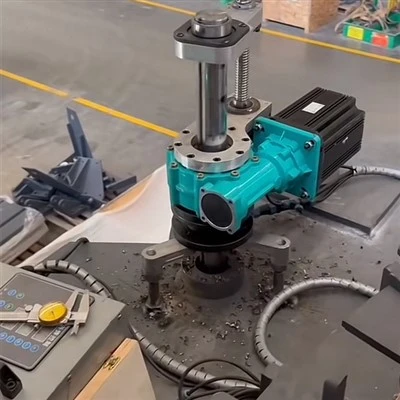
Here’s the thing: we build our portable lathes to be tough, reliable, and easy to use in the toughest conditions, but safety starts with you. None of these tips are complicated, none of them are a hassle, and all of them will keep you and your crew from getting hurt, protect the lathe you invested in, and get the job done right the first time. If you’re in the market for a portable lathe, or you’re looking to upgrade the one you’ve been using, we’re here to help—we don’t just sell units, we work with operators every day to make sure they have the right gear, and answer any safety questions that pop up. Whether you’re working on a 2-foot pump shaft or a 10-foot mill roll, we’ve got models built for every job, and our team can walk you through exactly what safety steps you need for your specific project. Don’t cut corners on safety, don’t cut corners on your gear—reach out to us, and let’s make sure your next job is a safe one.
Circular Mill References:
- Occupational Safety and Health Administration (OSHA). Portable Power Tool Safety Guidelines. U.S. Department of Labor, 2022.
- National Institute for Occupational Safety and Health (NIOSH). Field Machining Safety Best Practices. Centers for Disease Control and Prevention, 2021.
- Portable Lathe Manufacturers Association. Operator Safety Handbook for On-Site Machining, 2020.
- American National Standards Institute (ANSI). Safety Requirements for Machine Tools, Part 2: Portable Lathes, 2019.
Shangqiu JDA Machinery Technology Co., Ltd.
With abundant experience, we are one of the most professional portable lathe manufacturers and suppliers in China. We warmly welcome you to buy cheap portable lathe for sale here from our factory. Quality products and reasonable price are available.
Address: No. 55 Pingyuan Middle Road, Liangyuan District, Shangqiu, Henan, China
E-mail: sales@jdamachines.com
WebSite: https://www.jdamachines.com/
