Can an Oscillatory Wave Partial Discharge Tester be used for on – line monitoring?
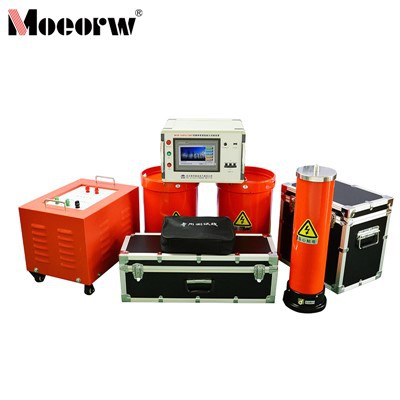
In the field of electrical power systems, ensuring the reliability and safety of high – voltage equipment is of paramount importance. Partial discharge (PD) is a significant indicator of insulation degradation in high – voltage equipment, such as cables, transformers, and switchgear. Oscillatory Wave Partial Discharge Testers (OWPDT) have emerged as valuable tools for assessing the insulation condition of power cables. However, the question arises: Can an OWPDT be used for on – line monitoring? As a supplier of OWPDT, I am well – positioned to explore this topic in depth. Oscillatory Wave Partial Discharge Tester
The Basics of Oscillatory Wave Partial Discharge Testers
An Oscillatory Wave Partial Discharge Tester is designed to generate an oscillatory voltage wave to simulate the operating voltage stress on power cables. This method is particularly useful for testing medium – voltage cables. The tester charges the cable to a specific voltage level and then discharges it through an inductor, creating an oscillatory voltage wave. During this process, any partial discharges within the cable insulation are detected and analyzed.
The main advantage of OWPDT is its ability to diagnose the insulation condition of cables without the need for long – term interruptions of power supply. Compared to traditional DC withstand voltage tests, which may have limitations in accurately detecting insulation defects, the oscillatory wave test can better simulate the actual operating conditions of cables.
On – line Monitoring: Concepts and Requirements
On – line monitoring refers to the continuous or periodic measurement of equipment parameters during normal operation without interrupting the power supply. For power cable insulation monitoring, on – line monitoring can provide real – time information about the insulation condition, allowing for early detection of potential faults and timely maintenance.
To be used for on – line monitoring, a testing device should meet several requirements. Firstly, it must not interfere with the normal operation of the power system. Secondly, it should have high reliability and stability to ensure accurate and continuous data collection. Additionally, the device should be able to withstand the harsh electromagnetic environment and various operating conditions in the power grid.
Feasibility of Using OWPDT for On – line Monitoring
Advantages of OWPDT for On – line Monitoring
- Similarity to Actual Operating Conditions: As mentioned earlier, the oscillatory voltage wave generated by OWPDT can better simulate the actual voltage stress on cables during normal operation. This means that the partial discharge signals detected by OWPDT are more representative of the real – world insulation conditions. For on – line monitoring, this similarity can provide more accurate and reliable information about the insulation status.
- Non – Intrusive Nature: In theory, an OWPDT can be designed in a way that minimizes its impact on the normal operation of the power system. With proper coupling and isolation techniques, it is possible to inject the oscillatory voltage wave into the cable without causing significant interference to the power flow.
- Sensitivity to Insulation Defects: OWPDT is highly sensitive to various insulation defects, such as voids, cracks, and water trees in cable insulation. This sensitivity makes it suitable for on – line monitoring, as it can detect even small – scale insulation degradation at an early stage.
Challenges of Using OWPDT for On – line Monitoring
- Electromagnetic Interference: The power grid is a complex electromagnetic environment filled with various interference sources, such as power frequency harmonics, switching transients, and radio – frequency interference. These interferences can easily mask the partial discharge signals detected by OWPDT, making it difficult to accurately analyze the insulation condition.
- Power Flow and Voltage Fluctuations: During normal operation, the power flow and voltage in the power system are constantly changing. These changes can affect the stability of the oscillatory voltage wave generated by OWPDT and may also introduce additional noise into the measurement results.
- Compatibility with the Power System: Integrating an OWPDT into an on – line monitoring system requires ensuring its compatibility with the existing power system infrastructure, including the cable network, protection devices, and control systems. This may involve complex technical and safety considerations.
Solutions to Overcome the Challenges
Despite the challenges mentioned above, there are several solutions that can be employed to make OWPDT suitable for on – line monitoring.
- Advanced Signal Processing Techniques: By using advanced signal processing algorithms, such as wavelet transform, neural networks, and pattern recognition, it is possible to filter out the electromagnetic interference and extract the real partial discharge signals from the noisy measurement data.
- Adaptive Monitoring Strategies: Instead of relying on a fixed set of testing parameters, an adaptive monitoring strategy can be adopted. This strategy adjusts the testing parameters of OWPDT in real – time according to the changes in the power system operating conditions, such as power flow and voltage levels, to ensure the stability and accuracy of the measurement results.
- System Integration and Compatibility Testing: Before installing the OWPDT in an on – line monitoring system, thorough system integration and compatibility testing should be carried out. This includes testing the interaction between the OWPDT and the existing power system components, ensuring that the device does not cause any adverse effects on the system operation.
Case Studies and Practical Experience
In recent years, there have been some successful attempts to use OWPDT for on – line monitoring in the field. For example, in some medium – voltage cable networks, OWPDT – based on – line monitoring systems have been installed to continuously monitor the insulation condition of cables. These systems have helped in early detection of insulation defects, preventing cable failures and improving the reliability of the power supply.
One case study involved a power distribution company that installed an OWPDT – based on – line monitoring system in a cable network with a high density of medium – voltage cables. By continuously monitoring the partial discharge signals, the system detected an early – stage insulation defect in a cable. The defect was repaired in a timely manner, avoiding a potential cable breakdown and the associated power outage.
Conclusion and Call to Action
In conclusion, while there are challenges in using an Oscillatory Wave Partial Discharge Tester for on – line monitoring, with the application of advanced technologies and proper solutions, it is feasible to achieve reliable on – line monitoring of cable insulation using OWPDT. As a supplier of OWPDT, we have been committed to developing and improving our products to meet the needs of on – line monitoring applications.
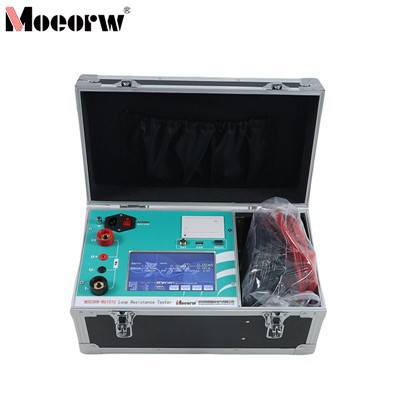
Our OWPDT products are equipped with the latest signal processing algorithms and adaptive monitoring features, which can effectively overcome the challenges of electromagnetic interference and power system fluctuations. We also provide comprehensive system integration and technical support services to ensure the seamless integration of our products into your on – line monitoring systems.
Transformer Capacitance and Tan Delta Tester If you are interested in exploring the possibility of using our Oscillatory Wave Partial Discharge Testers for on – line monitoring in your power system, we invite you to contact us for a detailed discussion. Our team of experts is ready to provide you with customized solutions and professional advice to help you improve the reliability and safety of your high – voltage equipment.
References
- Les Renner, "Partial Discharge Testing of MV Cables Using Oscillating Wave Voltage", IEEE Electrical Insulation Magazine, Vol. 22, No. 6, 2006.
- J. C. Martins, et al., "On – line Monitoring of Partial Discharges in Power Cables", IEEE Transactions on Dielectrics and Electrical Insulation, Vol. 15, No. 3, 2008.
- S. Gubanski, "Insulation Diagnosis of Power Cables Using Oscillating Wave Test", CIGRE Session, Paris, 2010.
Wuhan Moen Intelligent Electric Co., Ltd.
As one of the most professional oscillatory wave partial discharge tester manufacturers in China, we’re featured by quality products and good price. Please rest assured to buy high quality oscillatory wave partial discharge tester in stock here and get quotation from our factory. Customized orders are welcome.
Address: Building A, No.1, Fenghuangyuan 2nd Road, Donghu New Technology Development Zone, Wuhan, Hubei, China
E-mail: info@hvhipotsystem.com
WebSite: https://www.hvhipotsystem.com/
