If you’ve ever worked in industrial fluid transfer—whether on a construction site pumping diesel, a farm moving irrigation water, or a manufacturing facility transferring chemical blends—you know Camlock couplings are the unsung heroes that keep operations moving smoothly. These quick-disconnect fittings (officially named cam and groove couplings) are designed for speed, ease of use, and reliability, but like any component exposed to frequent wear, they won’t last forever. As a Camlock coupling supplier with over a decade of supporting trades across North America, I’ve seen firsthand what happens when a worn coupling slips mid-transfer, leaks hazardous fluids, or fails completely. In this post, I’m breaking down the science-backed signs that your Camlock coupling is worn out, when to replace it, and how to avoid costly downtime from a faulty fitting. Camlock Coupling
Let’s Start With How Camlock Couplings Are Built (And Fail)
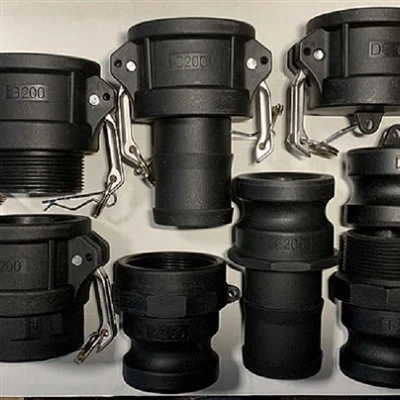
Before diving into wear signs, it helps to remember how Camlocks work, because their weak points reveal exactly where damage starts. A standard Camlock has three core functional parts: the male adapter (the grooved end that inserts into the female coupler), the female coupler (the open end with two spring-loaded metal cams), and the sealing gasket (the rubber or elastomer ring that sits between the two halves to prevent leaks). Most Camlocks are made of durable materials like aluminum, stainless steel, or brass, chosen for corrosion resistance and pressure ratings up to 150 PSI.
Wear doesn’t appear all at once—it accumulates gradually from repeated use: frequent coupling and uncoupling, exposure to harsh chemicals or UV light, abrasive debris in fluid lines, and pressure spikes. The most common failure points are the cams, the cam’s locking grooves on the male end, and the gasket. Ignoring these early warning signs is how you end up with a 500-gallon diesel spill on a construction site, a chemical leak that shuts down a processing plant, or hours spent debugging a flow disruption. After working with thousands of clients, I can tell you that 80% of avoidable Camlock failures are due to using a worn coupling past its service life.
1. Worn Cams: The First Sign of Mechanical Fatigue
The cams on a Camlock’s female coupler are the mechanical “grip” that locks the male adapter in place. When you twist the cam levers to secure the coupling, the cams slot into notches on the male adapter’s outside, creating a tight, leak-proof seal. Over time, two main issues damage the cams: surface wear and spring fatigue.
Surface wear happens when the cam’s locking teeth (the parts that bite into the male adapter’s notches) wear down from repeated use. Every time you couple and uncouple the fitting, the cams slide against the male end’s notches, and abrasive materials in fluid lines (like sand, concrete dust, or metal shavings) act like sandpaper, smoothing those teeth. This creates small, rounded edges on the cam instead of sharp, angular notches. Visually, you’ll notice the cam’s teeth no longer have a crisp, defined shape—they’ll look dull or worn down, like the edge of a used coin.
The second cam-related issue is spring fatigue. Each cam is attached to a small, heavy-duty spring inside the female coupler that pushes the cam outward when you twist the lever to lock it. After hundreds or thousands of engagements, these springs lose their tension. When springs weaken, the cams don’t extend fully to grip the male adapter’s notches. A key early sign here is when you couple the Camlock, it feels “loose” or wobbly when you shake it. When properly locked, a Camlock should be so tight you can’t twist it by hand, no matter how hard you pull. If yours moves, the springs are worn, and it’s at high risk of slipping under pressure.
I recently worked with a plumbing contractor in Texas who had a Camlock coupling slip mid-water transfer on a residential project. When they sent the faulty coupling back for inspection, the cams’ teeth were so worn down they barely extended 1/32 of an inch instead of the standard 1/8 inch. The contractor told me they’d been using the same couplings for three years without replacing them—classic example of ignoring early wear signs.
2. Damaged Gaskets: The Most Common Cause of Leaks
Gaskets are the quiet workhorses of Camlock couplings, and they’re also the first part to wear out. Gaskets are made of specific elastomers to match the fluid being transferred: EPDM for water and agricultural chemicals, Buna-N for petroleum products, Viton for harsh industrial chemicals, and silicone for high-temperature applications. Using the wrong gasket for your fluid is a quick way to speed up wear, but even the correct gasket will degrade over time.
Gasket wear has three distinct signs, and most are visible without disassembling the coupling. First, leaks around the connection point when the coupling is locked. If you see fluid seeping out between the male and female ends when the Camlock is secured, that’s almost always a gasket failure. Second, gasket swelling or degradation. If you remove the gasket, you’ll notice it’s swollen, brittle, cracked, or has a sticky residue on its surface. Swelling happens when the gasket is exposed to a fluid it’s not rated for—for example, an EPDM gasket exposed to gasoline will absorb the fuel and swell, destroying its ability to form a seal. Third, gasket compression set, a term engineers use to describe when an elastomer loses its ability to bounce back after being compressed. A gasket that’s lost its elasticity will be flat or permanently deformed when you press it with your finger, rather than springing back to shape.
A common mistake I see clients make is reusing gaskets when they service a Camlock. Every time you couple and uncouple a fitting, the gasket is compressed between the male and female ends, so it should be replaced with every coupling change. A used gasket that’s only been installed a few times can still fail at 50 PSI, compared to a new gasket which is rated for the full 150 PSI of most standard Camlocks.
3. Corrosion and Pitting: Hidden Wear That Compromises Structural Integrity
Cam couplings are built to resist corrosion, but they’re not indestructible, especially if they’re used in harsh environments. Corrosion and pitting are insidious signs of wear because they start small, but can quickly compromise the coupling’s structural integrity.
Corrosion appears as discoloration, rust, or white powdery residue on aluminum or brass couplings, or rust streaks on stainless steel. Pitting is when small, tiny indentations (or pits) form on the coupling’s metal surface, usually from exposure to saltwater, acidic chemicals, or high humidity. The problem with pitting is that it weakens the metal over time. A Camlock with deep pits can crack or break under pressure, which is a catastrophic failure waiting to happen.
I recently handled a claim for a food processing plant that used aluminum Camlocks for transferring cleaning chemicals. The couplings were stored outdoors, exposed to constant humidity, and within 18 months, deep pitting formed on the female coupler’s interior. When they connected the coupling to a 2-inch stainless steel line, the pitted area of the Camlock could not withstand the 100 PSI line pressure, and the coupler split open, spilling a batch of cleaning solution and shutting down production for 12 hours. That failure cost the plant over $15,000 in downtime, not to mention clean-up costs—all because they didn’t check their Camlocks for corrosion every quarter.
4. Difficulty Coupling or Uncoupling: A Mechanical Red Flag
Another early sign of a worn Camlock is difficulty when engaging or disengaging the coupling. If you have to use pliers or a hammer to twist the cam levers to lock the coupling, that’s a clear sign of wear or misalignment. This usually happens when the male adapter’s locking notches (the grooves on the outside of the male end) are worn down or damaged. When the notches get rounded or filled with debris, the cams can’t slide into them smoothly, so you have to force the coupling together.
Forcing a worn Camlock into place is a bad habit—it only accelerates wear, and can even cause the cam lever to break mid-use, leaving you with a coupling stuck on a line that you can’t disconnect. If you’re regularly fighting to couple or uncouple your Camlocks, it’s time to inspect the male adapter’s notches, clean them thoroughly, and replace the coupling if the notches are damaged.
When to Replace vs. Repair a Camlock Coupling
A common question I get as a supplier is: “Can I repair a worn Camlock, or do I need a new one?” The short answer is: only minor issues can be repaired, and most worn Camlocks should be replaced. Here’s a quick guide:
- Repairable issues: Worn cams that just need a spring replacement, or a damaged gasket (as long as the metal coupling is structurally sound). Always use genuine OEM gaskets and springs—cheap aftermarket parts often don’t match the Camlock’s pressure ratings, which can lead to failure.
- Replace immediately if: Cams are severely worn or broken, the coupling has deep pits or cracks, the male adapter’s locking notches are damaged, or the coupling is leaking even after replacing the gasket.
How to Extend Your Camlock Couplings’ Service Life
The best way to avoid premature wear is regular maintenance. I recommend every client I work with perform these simple steps every 3 months, or after every 50 coupling/uncoupling cycles, whichever comes first:
- Inspect cams and springs: Check for wear, dull edges, or loose springs. Lubricate cams with a food-grade or petroleum-grade lubricant (depending on your application) to reduce friction.
- Check gaskets: Remove the gasket, inspect for swelling, cracks, or compression set, and replace if any signs of wear are present.
- Clean couplings thoroughly: Remove debris, dirt, or chemical residue from the interior and exterior of the coupling, especially the locking notches and cam grooves.
- Store properly: Keep Camlocks in a dry, temperature-controlled area when not in use, and avoid stacking heavy objects on top of them, which can deform the gasket or warp the metal.
Ready to Upgrade Your Worn Camlock Couplings?
Safety Clamp If you’ve noticed any of these signs on your couplings, or it’s just time to replace worn parts before a costly failure, our team is here to help. We stock a full range of Camlock couplings in aluminum, stainless steel, and brass, with gaskets rated for every common fluid type—from water and diesel to harsh industrial chemicals and food-grade substances. Our experts can help you match the right coupling to your application, so you get the durability you need without overspending on unnecessary features. Don’t wait for a leak or a breakdown to disrupt your operations—reach out to us today to discuss your needs, order replacements, or ask questions about Camlock maintenance.
References
- Fluid Power Distributors Association. (2021). Cam and Groove Coupling Service Life and Maintenance Guidelines. FPD A Technical Bulletin.
- American National Standards Institute. (2019). ANSI/ASSP Z244.1-2019: Control of Hazardous Energy (Lockout/Tagout) for Fluid Transfer Systems.
- Manufacturing Extension Partnership. (2022). Reducing Unplanned Downtime in Fluid Transfer Operations: Best Practices for Cam and Groove Couplings. MEP Technical Report.
Suzhou Fuyikang Metal Industrial Co., Ltd.
As one of the most professional camlock coupling manufacturers and suppliers in China, we have world-leading production equipment and strong manufacturing capabilities. We warmly welcome you to buy bulk high quality camlock coupling for sale here from our factory.
Address: No.26.Mudong Rd,Mudu Town, Wuzhong Distric, Suzhou City,Jiangsu Province,China
E-mail: SZFYK@SZFUYIKANG-COUPLING.COM
WebSite: https://www.fyk-coupling.com/
