If you’ve ever watched a construction crane lift a 20-ton beam into place, or seen a forestry machinery shears slice through a fallen oak like it’s a sheet of paper, the brute force that makes those moves possible almost always comes from a hydraulic power unit—what most folks in the business just call an HPU. I’ve been in the hydraulic parts supply game for 12 years, and I can’t tell you how many times a new customer has walked into our shop (or shot me a late-night Slack, let’s be real) asking, “What even is this thing, and why do I need 12 different parts to keep it running?” Let me break it down like I would over a cup of cold coffee at a job site, no stuffy engineering jargon unless it’s necessary. Hydraulic Parts
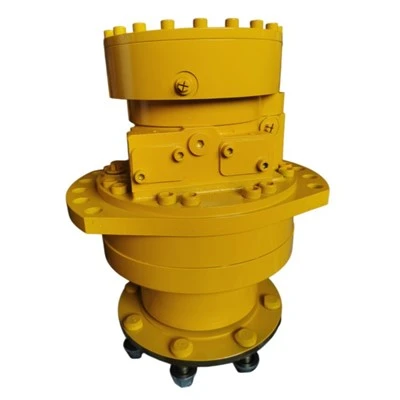
First off, a hydraulic power unit is the beating heart of every hydraulic system, period. It’s self-contained, which means it carries all the stuff it needs to generate, control, and direct hydraulic fluid right where it’s supposed to go—no external wiring or pumps rigged up from random parts. Think of it like a personal energy generator, specifically built to move liquid under pressure, because hydraulics work on a simple, old-school principle: you apply force to a small area, and that pressure multiplies to move a much larger load. A single HPU can run multiple tools at once, from a backhoe’s bucket to a press brake in a metal shop, so it’s way more efficient than running separate power sources for every single job.
Now, let’s talk parts, because that’s where I make my living, and that’s where most people mess up when they’re troubleshooting. I once had a guy call me at 2 a.m. panicking because his HPU was leaking everywhere, and when I asked what he’d checked, he said “the hoses.” I had to gently ask if he’d checked the reservoir, and he’d never even heard that word. Oops. Let’s go through each component step by step, like we’re pulling a HPU apart on our shop floor.
The first and most obvious part is the hydraulic fluid reservoir. This is just a tank—usually made of steel, sometimes aluminum for portable units— that holds all the fluid the system uses. But it’s not just a bucket; it’s got to do a few jobs. It has to hold enough fluid so that when the system is under full load, there’s no air getting sucked into the pump, because air bubbles turn hydraulic power into a sputtering, useless mess. It also lets heat escape, so most reservoirs have surface area that dissipates heat, and some have built-in cooling fins or even a small fan for hot environments. Oh, and every reservoir has a breather cap, right? That cap keeps dirt, dust, and water out of the fluid, but lets air in as the fluid expands and contracts. I can’t tell you how many times a bad breather cap has caused contaminated fluid that ruins a pump. That’s a $5 part that causes $5,000 in damage—always check the breather first.
Next up, the heart of the HPU: the hydraulic pump. This is the part that takes mechanical power—usually from an electric motor, a diesel engine, or even a gas engine—and turns it into hydraulic pressure. Pumps come in different types, and picking the right one is make-or-break. The most common ones are gear pumps, vane pumps, and piston pumps. Gear pumps are the workhorses, cheap, simple, and great for high-volume, low-pressure jobs like conveyor systems. I sell a ton of gear pumps to small farms and landscaping companies because they don’t need fancy tech. Vane pumps are a step up, more efficient, quieter, good for mid-pressure jobs like lifts or small presses. Piston pumps are the heavy hitters, for high-pressure applications like construction cranes or injection molding machines, where you need precise control and a lot of force. The biggest mistake I see here is buying a pump that’s too small for the job. A backhoe operator once told me he bought a cheap gear pump for his excavator, and it could barely lift half a bucket of dirt—turns out he needed a piston pump rated for 3,000 PSI, not the 1,500 PSI one he grabbed. Don’t cut corners here; we stock all three types, and I’ll help you pick the right one for your load.
Once the pump is pushing fluid, we need a way to control that pressure, right? That’s where the pressure control valves come in. The most important one here is the relief valve. This is like a pressure release for the system. If the load gets too heavy, or a valve gets stuck, the pressure spikes, and the relief valve opens up to let excess fluid flow back to the reservoir, preventing damage to the pump, hoses, or tools. Think of it like a safety valve on a tea kettle—you don’t want it to blow. Then there are pressure reducing valves, which lower pressure for specific parts of the system, and sequence valves that make sure one action happens before another, like making sure a crane’s arm extends before it lifts the load. Valves are all about control, and if a valve fails, the whole HPU goes from smooth operation to a runaway mess. I keep a spare set of valves in stock for every common application, because nobody wants to wait a week for a replacement at a job site.
Then we have flow control valves. These adjust how fast the fluid moves, so you can control the speed of the cylinder or motor. For example, if you’re running a lift gate on a delivery truck, you don’t want it slamming down fast—you want it to move at a steady, safe speed. Flow control valves let you dial that in. Some are manual, some are electronic for modern machinery. I once helped a race car team that was having trouble with their lift for the engine blocks—their flow valve was sticking, so the block would either move too fast and bounce or too slow and hold up the team. Swapping in a precision flow control valve fixed it in 10 minutes, and they were back on the track. Can’t beat that.
Next, let’s not forget the actuators, because the HPU is useless if you don’t have something to move. The two main actuators are cylinders and hydraulic motors. Cylinders are linear—they push or pull in a straight line, perfect for lift gates, cranes, or plows. Hydraulic motors are rotary, so they spin, great for things like conveyor belts, augers, or the wheels on a skid steer. Cylinders have seals, right? Seals are tiny, usually rubber or polyurethane, but they’re super important. A bad seal will leak fluid, and even a small leak can lead to lost pressure, which means lost power. I sell more cylinder seals than any other part, and I always tell customers to keep a spare set on hand. They’re cheap, take 10 minutes to swap, and save you from a whole day of downtime.
Now, we need to make sure the fluid stays clean, because dirty fluid is the number one cause of HPU failure. That’s where filters come in. Hydraulic filters catch dirt, metal shavings, and water that get into the fluid, either from the reservoir or from wear in the pump or cylinders. There are high-pressure filters, which are near the pump, and return filters, which are where the fluid flows back to the reservoir. Some systems even have offline filters that run all the time, keeping the fluid clean even when the HPU isn’t active. I can’t stress this enough: change your filters on schedule, not when they’re clogged. Clogged filters make the pump work harder, which shortens its life, and if a filter breaks, all that crud goes straight to the pump, ruining it. I recommend changing filters every 500 to 1,000 hours of operation, depending on how dirty your environment is. If you work in a construction site with a lot of dust, do it more often.
Then there are the auxiliary parts that people forget, but are essential. Hoses and tubing, for example. Hoses are flexible, good for moving fluid around moving parts, like the arm of a backhoe. Tubing is rigid, good for fixed parts. You have to pick the right pressure rating for your hoses—using a hose rated for 1,000 PSI on a system that runs at 3,000 PSI is a disaster waiting to happen. Fittings are another part—they connect hoses and tubing together, and a loose or wrong fitting is a leak waiting to happen. I always make sure my fittings match the hoses and ports, because a cross-threaded fitting can leak just as bad as a cracked hose.
We also have monitoring parts: pressure gauges, temperature gauges, and level sensors. A pressure gauge lets you check if the system is running at the right pressure—if it’s spiking, you know there’s a problem before it causes damage. A temperature gauge is important too, because if the fluid gets too hot, it breaks down, loses its lubricating properties, and can damage all the parts. Most HPUs have a warning light if the fluid gets too hot, but checking the gauge regularly will catch issues before they become expensive.
Now, let’s put this all together. Let’s say you’re a small construction company with a skid steer loader. The HPU on that skid steer has a reservoir to hold the hydraulic fluid, a gear pump powered by the skid steer’s diesel engine to push the fluid, relief valves to keep pressure from spiking, flow control valves to adjust the speed of the bucket, cylinders to move the bucket up and down, filters to keep the fluid clean, hoses to connect all the parts, and pressure gauges to monitor everything. Without all those parts working together, the skid steer is just a big metal box sitting there.
I’ve seen a lot of misconceptions about HPUs over the years. Some people think they’re only for big construction jobs, but no—small portable HPUs power everything from hydraulic jacks to boat lifts to carnival ride parts. Others think you need to be a mechanical engineer to maintain one, but most of the regular maintenance is simple: check the fluid level, change the filters, inspect hoses for cracks, make sure the breather cap is working. I train every customer who buys parts from me on the basics, because avoiding a breakdown is way better than fixing one.
I started this parts business because I saw too many guys getting stuck out in the field, no parts available, and losing thousands of dollars a day in downtime. A few years back, a landscaper called me at 6 a.m., his truck’s lift gate HPU had a bad pump, and he had 100 loads of mulch to deliver that day. I had a replacement pump on the shelf, drove 45 minutes to his yard, swapped it out in an hour, and he was back on the road. That’s the kind of service I care about—selling parts, but also helping people keep their equipment running.
If you’re in the market for hydraulic parts, need help picking the right HPU components, or just have a question about your system, don’t hesitate to reach out. I know how frustrating it is when a piece of equipment goes down, and I’m here to help you get the right parts, fast. No runaround, no sales jargon, just honest advice and quality parts. Let’s get your equipment running smooth, so you can get the job done.
Poclain Hydraulic Motor References:
Hydraulic Power Unit Design and Maintenance. Fluid Power Society, 2021.
Hydraulic Components Selection Guide. Parker Hannifin Corporation, 2022.
Common Hydraulic System Failures and Prevention. International Association of Operators, 2020.
Ningbo Oushijie Hydraulic Transmission Co., Ltd.
Ningbo Oushijie Hydraulic Transmission Co., Ltd. is one of the most professional hydraulic parts manufacturers and suppliers in China, also supports customized service. With abundant experience, we warmly welcome you to wholesale durable hydraulic parts at competitive price from our factory.
Address: Changshi Sanxing Industrial Zone, Jiulong Lake Town,Zhenhai District, Ningbo, Zhejiang, China
E-mail: yong@nbosj.com
WebSite: https://www.nbosj.com/
