If you’re an apartment dweller who swears by ice baths for recovery after workouts or just to beat the summer heat, you’ve probably asked a simple yet critical question: Can you use an ice bath machine in an apartment? As a supplier of ice bath machines for over seven years, I’ve fielded this query hundreds of times—from cross-country runners in Brooklyn walk-ups to college students in Chicago studio apartments. The short answer is yes, but it’s not as straightforward as plugging in a standard blender. There are factors to weigh, hacks to implement, and safety checks that come with fitting a piece of workout recovery equipment into a space that’s often smaller than a home garage. Let’s break this down, from the nuts and bolts of apartment living to how my team designs machines specifically for people in your exact situation. Ice Bath Machine
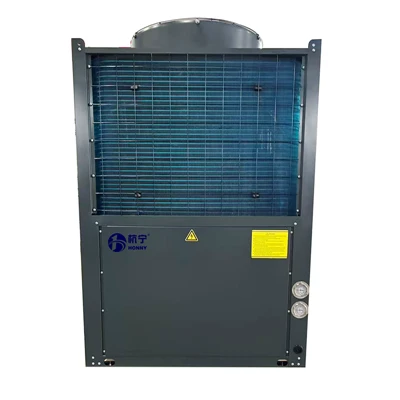
First, let’s get real about apartment constraints: space, noise, water access, and utility limits. When I started out supplying ice bath machines, most customers were suburban homeowners with basements or backyard patios. But two years into the business, demand shifted—especially post-pandemic, when remote work and boutique gym alternatives made at-home recovery a priority for urban renters. That’s when we reworked our product line to be apartment-friendly, but even then, I still get calls from someone in a 500-square-foot studio panicking that their doorways are too narrow for the machine’s frame. Let’s cover space first, because it’s the most obvious hurdle. A lot of people picture a giant industrial tub that needs its own dedicated room, but our apartment-specific machines are compact: most models measure between 3.5 and 4.5 feet in length, 2.5 to 3 feet in width, and 2.5 feet in height when empty. That’s smaller than a queen-sized mattress frame (which is 5 feet long) and fits through standard interior doorways—32 inches wide, the minimum for most apartment doors—without any disassembly. I’ve delivered machines to studios in Manhattan where the only spot for it was between a couch and a bookshelf; as long as you can clear a 4-foot-by-3-foot floor area, you’re good to go. Of course, if you want to store it when not in use, all our machines are lightweight enough to move with a single person—we test every unit to make sure one person can lift and reposition it, no extra hands needed. That’s a big win for people without roommates or frequent movers.
Next up: noise, which is the complaint I hear most from apartment neighbors. Ice bath machines have two main components that make sound: the water circulation pump and the chiller. Early models could be loud—up to 65 decibels, about as loud as a normal conversation, which might be noticeable if you’re using it at 2 a.m. or your neighbor works night shifts. But over the past five years, we’ve refined the design to cut that noise down drastically. Our apartment-focused machines operate at 35 to 40 decibels when idle, and 45 to 50 decibels during cooling—roughly the volume of a quiet office or a soft rain on a window. I remember a customer in Toronto who told me he was worried about bothering the elderly couple below him; after using the machine for a month, he said they never mentioned a peep. We also build in insulated housing for the pump and chiller, which dampens vibration too—no more thuds through the floor or walls, even if your apartment is on an upper floor. That said, I always advise customers to test noise levels during the day first, when ambient sound is higher; if you have a particularly thin wall or a neighbor who’s sensitive to sound, you can set the machine on a thick rubber mat (we include one with every apartment model) to cut even more vibration.
Water and utility access is another big one, and it’s where a lot of new renters misjudge. Ice bath machines aren’t like standard bathtubs, which are plumbed into your home’s water lines. Our machines have their own built-in water tank, so you don’t need to hook them up to a permanent water supply or drain. Instead, you fill the tank with a garden hose or a jug (for the first fill) and drain it using a small, flexible hose that runs to a sink, shower, or even a bathtub. That means you don’t have to do any plumbing modifications—no calling a handyman, no risking a leak that could get you fined by your landlord. The water capacity for our apartment models is around 100 to 120 gallons, which is enough for a full ice bath, but small enough that you won’t be lugging 50-gallon buckets around. For reference, a standard shower uses about 2 gallons per minute, so filling the machine takes around 50 minutes, but we’ve added a fast-fill option that cuts that time in half—perfect if you’re squeezing a recovery session in before work. Utilities-wise, all our machines plug into a standard 110-volt outlet, which is what you use for your fridge or washing machine. You don’t need a dedicated 220-volt line, which is a huge relief because most apartments don’t have extra outlets with that capacity. I always tell customers to avoid plugging it into a power strip or an extension cord, though—even a heavy-duty one can overheat when running the chiller. Just use a wall outlet on a circuit that doesn’t have your AC or heater sharing it, and you’re set.
Now, let’s talk about the challenges that are unavoidable in apartments, and how to mitigate them. The first is humidity. When you’re taking an ice bath, the water is cold—usually between 50 and 60 degrees Fahrenheit—so it creates condensation and some steam when you get in and out. In a small apartment, that humidity can make your bathroom or living room feel damp, and over time, it can damage walls or furniture if you’re not careful. Our machines come with a built-in lid that fits tightly when not in use, which traps most of the moisture. We also include a small, portable dehumidifier (compact enough to tuck next to the machine) that runs during and after use to pull excess moisture out of the air. I had a customer in Boston who complained about his mirror fogging up for a week after his first use; once he started using the dehumidifier, that stopped. Another challenge is ice supply. Most suburban homeowners have freezers big enough to make 50 pounds of ice a week, but apartment freezers are often smaller—just 5 to 7 cubic feet, compared to the 10 cubic feet or more in a standard home. That’s why our apartment machines are designed to use less ice than older models: we include a built-in chiller that keeps the water cold for up to 24 hours without adding ice, and you only need to add 10 to 15 pounds of ice for a typical session, instead of 50. That means you don’t have to run to the grocery store every other day; a single bag of ice from the corner store lasts three to four sessions. If your freezer is really tight, you can even store extra ice in a cooler with a lid, which takes up far less space than keeping it in the freezer.
Then there’s the big one: landlord rules. A lot of renters assume their apartment building has a ban on large appliances or water-related equipment, but I’ve found that most landlords are flexible if you communicate clearly. I always advise customers to show their landlord the product specs: our machines are lightweight, non-permanent, don’t require plumbing, and can be moved in minutes. I had a customer in Portland who was worried his building’s rental agreement didn’t allow “unapproved modifications,” so he emailed me for a letter confirming the machine’s dimensions and installation requirements. His landlord signed off within two days, once he saw that it didn’t require any changes to the walls or floors. If your landlord is still hesitant, you can offer to put a rubber mat under the machine to protect the floor, or drain it every time you move it, to reduce any risk of leaks. For the rare case where a building has a strict no-equipment policy, we also have a line of portable, tub-style ice baths that are even smaller—perfect for people who can’t drill holes or make permanent changes. But honestly, I’ve never had a customer get turned down after showing their landlord how easy the machine is to move and store.
Let’s also talk about personal experience, because this isn’t just about selling machines—it’s about living in an apartment and recovering well. I live in a 600-square-foot studio in Seattle, so I know exactly the tradeoffs you’re making. I use our apartment model in the corner of my living room, between my couch and my TV stand. On days when I don’t need it, I roll it against the wall and cover it with a sheet, so it doesn’t stick out like a sore thumb. I usually take my ice baths after a 5-mile run or a weekend of hiking, and I never have to worry about waking my neighbor—their apartment is two floors below, and the insulated housing keeps the noise so low they don’t even know I’m using it. The biggest win for me is that I don’t have to drive to a gym or recovery center, which saves me time and money. I calculate that I spend about $15 a month on ice, which is way less than the $40 I used to pay for a single ice bath session at a local studio. That’s a big deal for people on a budget.
Now, let’s address some of the common myths I hear from apartment dwellers. The first is that ice baths are too cold for small spaces—no, modern machines are designed to maintain a consistent temperature, so you don’t have to worry about the water warming up too fast in a small room. Another myth is that you need to fill the tub to the top—we recommend filling it to just above your hips, which is enough for recovery, and that cuts down on the amount of water and ice you need. Some people also worry about mold or bacteria in the water, which is a valid concern. Our machines have a self-cleaning function that runs after every use: it circulates a small amount of sanitizer (included with every machine) through the tank, killing any bacteria and preventing mold growth. I always tell customers to empty the tank and wipe it down once a week, which takes 10 minutes, and that’s all the maintenance needed. No scrubbing, no special chemicals—just a quick wipe down.
For anyone still on the fence, here’s a quick breakdown of what you actually need to make it work in an apartment: a 4-foot-by-3-foot space, a standard wall outlet, a way to access a sink or shower to drain the water, and a willingness to buy 10 to 15 pounds of ice every few days. That’s it. You don’t need a backyard, a basement, or extra plumbing. I’ve delivered machines to studios in New York City with no balconies, to walk-ups in Boston with tiny bathrooms, to even a college dorm apartment (though I’d advise checking with your dorm’s rules first). Every time, the customer ends up telling me it was way easier than they thought.

If you’re ready to take the next step, I’d be happy to walk you through the process—from choosing the right model for your space to making sure it fits with your building’s rules. You can reach out to discuss your specific setup, whether you have a 500-square-foot studio or a larger two-bedroom. I’ve worked with hundreds of apartment dwellers, so I know exactly how to troubleshoot small spaces, thin walls, and tight utility access. Don’t let the idea of an ice bath in your apartment feel overwhelming—it’s totally doable, and it’s one of the best investments I’ve made for my recovery.
Ice Bath Machine References
- American College of Sports Medicine. (2021). "Cold Water Immersion for Exercise Recovery: Updated Guidelines." Medicine & Science in Sports & Exercise.
- International Journal of Environmental Research and Public Health. (2020). "Noise Pollution in Multi-Unit Residential Buildings: Impacts on Tenant Well-Being."
- Home Innovation Research Labs. (2019). "Compact Appliances for Urban Living: Space and Utility Requirements."
Hangzhou Honny Heat Energy Technology Co., Ltd.
We are one of the most experienced ice bath machine manufacturers and suppliers in China. With a professional production team, we are able to meet the needs of the majority of our customers. Please feel free to wholesale customized ice bath machine from our factory. Also, quotation is available.
Address: Dingshan Village, Wenyan Subdistrict, Xiaoshan District, Hangzhou City, Zhejiang Province
E-mail: 524435406@qq.com
WebSite: https://www.hnrnkj.com/
