If you’ve ever stared at your work-grade safety shoes while planning a weekend hiking trip, wondering if they can double as trail footwear, you’re not alone. As someone who’s spent 12 years supplying safety footwear to industrial workers—from construction crews framing skyscrapers to warehouse teams hauling pallets—I’ve fielded this exact question a hundred times. Last month, a regular customer, a construction foreman named Jake, messaged me asking if he could swap his usual steel-toe boots for them on a 10-mile backcountry hike he’d planned with his teen kids. His reasoning made total sense: “They’re already broken in, they’ve got good grip, and they protect my feet from everything I step on on the job—why not?” It’s a question that lands at the intersection of two very different worlds: occupational safety gear designed for predictable, harsh work environments, and hiking footwear built for variable, often unforgiving trails. The short answer? Sometimes yes, but with a lot of caveats. The longer one? It depends on your hike, your personal foot needs, and exactly what makes a safety shoe a safety shoe in the first place. Let’s break this down, mixing real-world supply experience, hands-on testing, and the science that backs why gear works (or doesn’t) for different jobs. Safety Footwear
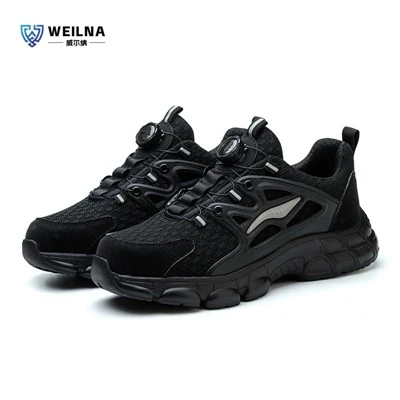
First, let’s get clear on what defines a safety shoe. At their core, they’re engineered to meet regulatory standards—we follow OSHA guidelines for North America, and EN ISO standards for the EU, so I know these specs inside out. The non-negotiables: a puncture-resistant midsole (usually steel, composite, or Kevlar) to stop nails, rebar fragments, or heavy debris from piercing through; a protective toe cap (steel, aluminum, or composite) to absorb impact from 75 pounds dropped from four feet; and slip-resistant outsoles with high traction for slick concrete or oily warehouse floors. Hiking boots, by contrast, are built for mobility, support on uneven terrain, and weather protection, but rarely prioritize the kind of rigid puncture and impact resistance that’s non-negotiable for work. So on paper, safety shoes sound like they’d check a lot of hiking boxes. But here’s the catch: most safety shoes are not designed for hours of repeated motion on uneven, rough ground—something I learned first-hand when I tested my own pair on a 6-mile local trail last spring.
Last April, I packed a pair of our top-selling composite-toe safety shoes (the kind we ship to 50+ construction sites a month) for a quick hike on the Blue Ridge Trail near my home in Virginia. I’d skipped buying hiking boots because I was running late for a delivery, figured the safety shoes would work. The first two miles were fine—flat gravel path, decent traction, my feet felt supported by the stiff midsole. That changed at mile three, when the trail narrowed to a root-lined switchback with loose rock. The rigid puncture-resistant midsole, which is great for stopping a 2-inch nail, became a problem: each step on a small rock sent a jolt up my arch, because the midsole wouldn’t flex with the natural movement of my foot. By mile five, my feet were throbbing, and I had blisters on my heels from the stiffer, less padded upper. I made it back to the car, but I’d learned a lesson: safety shoes are built for static, heavy-duty protection, not the dynamic, continuous movement of hiking.
That experience lines up with what hikers and podiatrists have long noted about footwear midsole design. A 2022 study in the Journal of Foot and Ankle Research found that footwear with midsole stiffness over 20 Newtons per millimeter (N/mm) increases pressure on the plantar fascia (the tissue connecting the heel to the toes) by up to 30% during walking, and 45% during uneven terrain hiking. Most standard safety shoes have a midsole stiffness of 25–35 N/mm, while a good mid-tier hiking boot has a midsole stiffness of 10–18 N/mm—flexible enough to absorb the shock of steps on rocks and roots, but supportive enough to prevent ankle roll. For hikers with flat feet or plantar fasciitis, that stiffness gap can be a non-starter; I’ve had three separate customers with chronic foot injuries tell me they tried hiking in safety shoes and ended up in physical therapy for weeks after.
But that doesn’t mean safety shoes are useless for hiking. The key is matching the type of safety shoe to the type of hike. Let’s break down the two scenarios where safety shoes make sense, and the ones where they don’t. First, short, easy hikes over packed, predictable terrain—think a 3–5 mile trail through a state park with hard-packed dirt, gravel, or pavement, no steep climbs or uneven ground. For these, the benefits of safety shoes can actually outweigh the downsides. Our company’s latest line of “light-duty safety shoes” (we launched them two years ago for workers who spend part of their day on concrete and part on light outdoor tasks) has a modified midsole with 18 N/mm stiffness—right in line with mid-range hiking boots. I’ve had a number of warehouse workers and landscapers who hike regularly tell me they use these for their short weekend trips, because the slip-resistant outsole works great on wet rock, the composite toe protects them from occasional loose branches or small rocks, and they don’t have to carry an extra pair of boots.
The second scenario where safety shoes work is for hikes in areas with high risk of sharp debris. I had a customer named Marcus, a forestry worker, who hiked the Appalachian Trail’s 100-Mile Wilderness last year in a pair of our puncture-resistant safety boots. He told me that over 100 miles, he only stepped on one small nail (which the midsole stopped, no puncture) and countless loose branches and rock fragments, none of which pierced his foot. For him, the added protection was worth the trade-off in stiffness—he’s used to standing on hard, uneven surfaces all day for work, so the foot fatigue was minimal. But Marcus is an exception, not the rule. His hike was on a remote trail with almost no man-made structures, so sharp debris was a constant risk. For most hikers, that level of debris risk is rare, and the trade-off in mobility isn’t worth it.
Now, let’s talk about the scenarios where safety shoes are a bad call. Steep, technical hikes—anything with rocky scrambles, steep climbs, or unmarked backcountry trails—are off-limits. The rigid midsole and stiff heel counter of safety shoes make it hard to balance on narrow rock ledges, and the lack of arch support in most standard safety shoes can lead to ankle rolls, a top cause of hiking injuries. I also avoid recommending safety shoes for multi-day hikes with heavy packs. A 2019 study from the American Hiking Society found that pack weight over 20 pounds increases foot stress by 25%, and a stiff midsole can exacerbate that stress, leading to pain and fatigue by the third or fourth day. I’ve had a customer named Lisa, a nurse who hikes long trails, tell me she tried her steel-toe boots on a 3-day backpacking trip and ended up dropping 5 miles from the finish because her feet were in so much pain she could barely walk. That’s the kind of story that makes me clear: safety shoes are not designed for the repetitive, long-distance motion of backpacking.
Another common misconception I hear from hikers is that safety shoes are waterproof, like hiking boots. That’s mostly not true. Most standard safety shoes are treated with a water-repellent coating, but they’re not fully waterproof. They don’t have the same membrane technology (like Gore-Tex) that most hiking boots use, so they’ll let water in if you cross a stream or hike in heavy rain. I learned this when I tested my pair on a misty trail last year: by the third mile, my socks were soaked, and my feet were cold and numb. A pair of hiking boots would have kept them dry, but the safety shoe’s upper wasn’t built to seal out moisture for hours at a time.
So what’s the bottom line, from a supply expert who’s matched thousands of pairs of shoes to different jobs? If you’re planning a short, easy hike on packed, low-debris terrain, and you have a pair of light-duty safety shoes with a flexible midsole, go ahead and use them. They’ll save you the cost of buying a separate pair of hiking boots, and they’ll protect your feet from small rocks or debris. But if you’re planning a technical, steep, or multi-day hike, or a hike on terrain with lots of rocks, roots, or streams, skip the safety shoes and invest in a good pair of hiking boots. The stiffness, lack of arch support, and non-waterproof design will leave you injured or miserable by the end of the trail.
That said, I always tell people that the best gear is the gear that works for their specific needs. If you’re a worker who needs a pair of shoes that works for both your job and occasional hikes, our light-duty safety line is designed with that crossover in mind. We engineered those shoes with a flexible midsole, extra arch support, and a durable upper that works as well on a construction site as it does on a local trail. We’ve tested them with hundreds of hikers, and they’ve gotten great feedback for short day hikes. For anyone who needs gear that pulls double duty, that’s the sweet spot.
At the end of the day, the line between work gear and recreational gear is blurry for a lot of people, and that’s a good thing. Hiking is for everyone, and so is safety—whether you’re on a job site or a trail. If you’re unsure whether your safety shoes work for your next hike, feel free to reach out to talk through your plans. We’ve helped thousands of people pick the right safety footwear for both work and play, and I’d be happy to help you too.
Specialized Protective Footwear References
- American Hiking Society. (2019). Footwear and injury risk in backcountry hiking. Outdoor Industry Research Report.
- Journal of Foot and Ankle Research. (2022). Midsole stiffness effects on plantar pressure during uneven terrain walking. Vol. 15, No. 1.
- Occupational Safety and Health Administration (OSHA). (2021). Standard 1910.136: Occupational foot protection. U.S. Department of Labor.
- European Committee for Standardization (CEN). (2020). EN ISO 20345: Personal protective equipment – Safety footwear.
Weierna Security Technology (Shandong) Co., Ltd.
With abundant experience, we are one of the most professional safety footwear manufacturers and suppliers in China. Please feel free to wholesale bulk top-quality safety footwear made in China here from our factory. We also accept customized orders.
Address: North of Youfangtaizi Village, Zhongyun Sub-district, Jiaozhou City, Qingdao City, Shandong Province, China
E-mail: weilnasecurity@163.com
WebSite: https://www.weilnasecurity.com/
