If you’ve ever stood at the edge of an active open-pit mine, watching heavy-duty haul trucks rumble up and down battered access roads, or listened to the low thud of blasting deep underground, you’ve glimpsed the core of mining’s hidden work: stability. For all the drama of ore extraction and machinery, mining would grind to a halt without the quiet, unglamorous systems that prevent rock falls, cave-ins, and structural collapse—systems like backstops. As someone who’s spent the last 12 years supplying custom backstops to mines across North and Central America, I’ve learned to stop referring to them as “just another piece of mining gear.” They’re the unsung safety net that keeps every operation running, from small aggregate quarries to large-scale copper and gold mines. Backstop
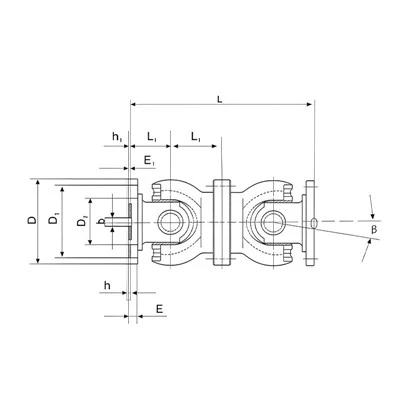
First, let’s cut through the jargon and get to the basics: what is a backstop in mining, exactly? At its most practical, a mining backstop is a structural support system designed to absorb, redirect, or contain unexpected forces that could damage mine openings, equipment, or personnel. Think of it as a reinforced barrier placed at weak points in a mine’s structure—whether that’s a vertical shaft, a horizontal tunnel (called a drift), or a steep rock face along a haul road. Unlike permanent, load-bearing walls that form part of a mine’s original infrastructure, backstops are often tailored to specific risks. For example, a backstop at the bottom of a raise (a vertical or inclined hole used to connect mine levels) is built to catch falling rock, while a backstop along a drift wall might be engineered to withstand the impact of runaway haul trucks.
To really understand their purpose, you have to step back and look at the stresses mining places on rock formations. When you carve openings into bedrock, you disrupt the natural equilibrium of stress that’s existed for millions of years. Over time, that stress shifts—called “rock movement”—and that’s where problems start. A small crack can widen into a loose slab, a section of wall can bow inward, or a heavy load (like a truck carrying 200 tons of ore) can jostle loose rocks on a steep access road. Backstops act as the buffer between that unplanned movement and people, equipment, and production timelines. Without them, a single rock fall can shut down operations for days, even weeks, while crews repair structural damage and carry out safety checks. I’ve seen a small midwest quarry lose $120,000 in a single week after an unprotected wall collapsed onto its conveyor belt—cost that could’ve been avoided with a properly installed backstop.
Backstops aren’t one-size-fits-all, and that’s where my job as a supplier comes in. We don’t just stock a generic “mining backstop” and ship it out. We work with mine engineers, site managers, and geologists to design systems that match the specific risk of each location. Let me break down the most common types you’ll encounter in modern mining, because each serves a unique role.
First, there’s the rockfall backstop, the most familiar type. These are typically installed along the high walls of open-pit mines, on steep access ramps, or at the entrances of underground drifts. They’re built to catch loose boulders and debris that dislodge from above. Our rockfall backstops, for example, use a combination of high-tensile steel mesh, heavy-duty anchor bolts, and a reinforced concrete base. We test each system to meet industry standards—like those set by the Mine Safety and Health Administration (MSHA) in the U.S.—to ensure they can stop a 2-ton boulder moving at 25 mph without failing. A few years back, we installed a set of these at a gold mine in Nevada; a month after installation, a 1.8-ton rock dislodged during a minor blast, and the backstop caught it cleanly, avoiding damage to a nearby service vehicle. That’s the kind of win that reminds me how important this work is.
Then there’s the runaway truck backstop, a critical component at mine sites where heavy haul trucks operate on uneven, steep terrain. These are different from rockfall backstops: instead of just catching debris, they’re engineered to decelerate a 100+ ton truck that’s lost its brakes, rolling backward or out of control down a slope. A good runaway truck backstop isn’t a wall—it’s a series of energy-absorbing structures, like sloped earth berms reinforced with steel grids, or steel-cable barriers that stretch to absorb impact without collapsing. Last year, we supplied a runaway truck backstop to a copper mine in Arizona, where the average grade of access roads is 8%. The system we installed can stop a fully loaded 220-ton haul truck traveling at 30 mph. It’s not a perfect solution, but it’s the last line of defense between a catastrophic crash and the lives of the operators inside.
For underground mines, the backstop definition expands a bit. There, backstops are often called support backstops, designed to stabilize mine openings as the mine extends deeper. These might be steel sets installed at the end of a drift to hold loose rock in place while crews install permanent support, or concrete plugs placed at the junction of two drifts to prevent pressure from shifting rock from one section to another. I once worked with a team at a zinc mine in Canada that was dealing with frequent rock bursts—sudden, violent releases of stress in the rock that can send debris flying. We designed a custom combination backstop that incorporated both steel reinforcement and rubber padding to absorb that sudden energy, reducing the risk of injury by 70% according to their internal safety reports.
A common mistake new mine managers make is treating backstops as a “set it and forget it” purchase. That’s a costly error, because a backstop’s effectiveness depends on proper design, installation, and regular inspection. Too often, mines will buy a cheap, off-the-shelf backstop to save money, only to find it fails within a year because it wasn’t tailored to their site’s specific geology. As a supplier, we don’t just sell a piece of equipment—we provide end-to-end support. That starts with a site assessment: our team visits the mine, maps the rock formations, checks existing stress points, and reviews past incident reports to identify exactly what kind of backstop is needed. Then we handle engineering and fabrication, and work with the mine’s contractors to install the system correctly, following MSHA’s strict guidelines for structural support in mining. And we don’t disappear after installation: we offer annual inspections and maintenance services to make sure the backstop stays in working order for the life of the mine.
I think a lot of people outside the mining industry see mining as just digging up resources, but the reality is, it’s a business built on safety and reliability. Every operator knows that a single shutdown can eat into profits, delay project timelines, and put workers at risk. Backstops are one of the most cost-effective investments a mine can make in that reliability. For perspective, a custom rockfall backstop might cost between $50,000 and $150,000, depending on the size and complexity. The average cost of a mine shutdown from a rock fall or structural collapse? According to MSHA, it’s closer to $200,000 per day—and that’s just direct costs, not the indirect costs of lost productivity, overtime for workers, or damage to reputation.
Over the years, I’ve seen how technology has transformed backstops too. It’s not just steel and concrete anymore. We now integrate sensor technology into some backstops—small, rugged accelerometers that monitor for shifts in the structure, alerting site managers to potential failures before they happen. For example, a backstop at a quarry in Oregon has sensors that send real-time data to the mine’s control room; if the structure shifts even a fraction of an inch, the team gets an alert and can schedule maintenance before a problem becomes an emergency. That kind of smart backstop is the future of mining safety, and we’ve been testing and rolling those systems out over the past three years.
I know that for mine managers, choosing a backstop supplier is a big decision. You need someone who understands the unique challenges of mining, not just general construction. You need a partner who can design a system that works for your site, not a one-size-fits-all product. For me, that’s why I’ve built my business around being that partner. I’ve worked with mines of all sizes, from small aggregate operations that only need a single rockfall backstop, to large mining complexes that require a network of support backstops across multiple levels. Every project, no matter how small, gets the same attention to detail.
If you’re a mine manager, safety director, or operations supervisor who’s reviewing your site’s structural support needs, I can help. Whether you’re looking to replace an outdated backstop, add a new system for an upcoming expansion, or just want to run a safety check on your current setup, my team and I can provide a free, no-obligation site assessment. We’ll walk your site, discuss your risks, and put together a custom solution that fits your budget and your operational needs. Mining doesn’t have to be as risky as it sometimes feels, and backstops are a big part of making that a reality.
Coupling References
- Mine Safety and Health Administration. (2022). Structural Support Standards for Metal and Nonmetal Mining. U.S. Department of Labor.
- International Society of Mine Safety Professionals. (2021). Rockfall Mitigation and Backstop Design Guidelines for Surface Mining. ISMSP Publications.
- National Stone, Sand, and Gravel Association. (2020). Cost of Unplanned Shutdowns in Aggregate Mining. NSSGA Research Report.
- Society for Mining, Metallurgy & Exploration. (2019). Underground Mining Structural Support and Backstop Technology Manual. SME Press.
Zhejiang Decheng Machinery Technology Co., Ltd.
As one of the most professional backstop manufacturers and suppliers in China, we have world-leading production equipment and strong manufacturing capabilities. Welcome to wholesale high quality backstop for sale here and get pricelist from our factory. We also accept customized orders.
Address: No. 10 Fuqiang Road, Shefan Village, Xianyan Subdistrict, Ouhai District, Wenzhou City, Zhejiang Province
E-mail: info@wzdclzq.com
WebSite: https://www.dccoupling.com/
