Hey there! If you’ve been dabbling in bathroom renovations lately (or even just daydreaming about swapping your old, cramped tub for something sleek), you’ve probably stumbled on two terms nonstop: custom shower enclosures and curbless showers. I get it—when I first started in this industry, I thought they were totally separate things, like oil and water. But after a decade of installing and tweaking these bad boys for hundreds of clients, I’m here to tell you: they work way better together than most people realize. Let’s break this down, no boring jargon, just real talk from someone who’s actually seen these setups in action. Custom Shower Enclosures
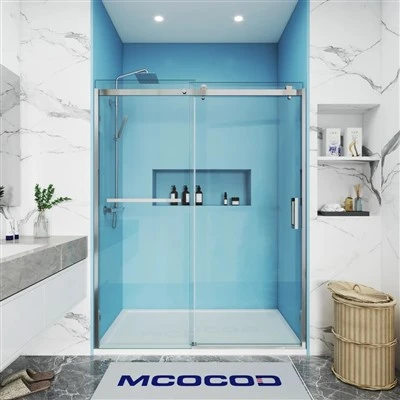
First off, let’s get the basics straight because I still run into homeowners who mix these two up. A curbless shower, for anyone new, is exactly what it sounds like—no raised threshold (that weird lip you used to trip over after stepping out of the tub) separating the shower from the rest of the bathroom. It’s all one level, usually with a slight slope toward a linear drain so water doesn’t pool anywhere. The big perks? Accessibility for folks with mobility issues (hello, aging in place!) and that seamless, modern vibe that makes small bathrooms look way bigger.
Custom shower enclosures, on the other hand, are the ones we build just for your space—no one-size-fits-all cheap frames. We cut the glass, tailor the seals, pick the right hardware to match your bathroom’s finish. The key word here is custom—so it fits your exact dimensions, not some standard sheet of glass off a store shelf.
Now, the big question: do they actually pair? Spoiler: yes, but it’s not just hanging a custom glass wall next to a curbless drain. There are a few things you gotta nail down first, otherwise you’ll end up with leaks or a weird, unstable setup. Let’s start with why they’re a match made in bathroom heaven when done right.
Curbless showers live or die by waterproofing, right? If your enclosure’s not sealed properly, water’s gonna creep under the glass, get into the bathroom’s subfloor, and turn into a moldy mess that costs thousands to fix. That’s where custom enclosures shine. Since we build them from scratch, we can adjust the seal to work with the curbless slope. Wait, what slope? For a curbless shower, you need about a 1/4-inch drop per foot from the back wall to the drain. If your enclosure’s glass panels are too wide, we can tweak the bottom track (yeah, we make that too) to follow that slight slope so water doesn’t get trapped between the glass and the bathroom floor. A prefab enclosure can’t do that—they’re made for flat, tiled shower bases, not sloped curbless ones.
Another win: accessibility. A lot of people go curbless to make the bathroom easier to navigate—think rolling a wheelchair in without lifting a leg, or just not having to step over that stupid lip when you’re carrying laundry or a toddler. Custom enclosures can be designed with a low-swing door (like a pivot door instead of a hinged one that opens inward) or even a sliding panel that glides low to the floor. No thresholds mean no chance the door’s gonna hit a raised lip when you’re opening it. I did a job last year for a retired vet with a bad knee—they wanted a curbless shower so they could wheel in a shower chair, and a custom enclosure let us cut the bottom track so it sat just 1/8-inch off the floor. Worked like a charm; he said he no longer dreads showering because he doesn’t have to hoist himself over a curb.
Wait, but what about leaks? I know that’s the biggest fear for anyone thinking about this combination. Let’s be real—prefab enclosures leak all the time because they’re generic, but custom ones? We account for every variable. For example, if your curbless shower has a linear drain along the back wall, we can size the back glass panel to wrap around the drain edge, then add a silicone seal that’s specifically formulated for wet areas (we only use the good stuff, not that drugstore silicone that cracks after a year). Also, custom enclosures let us skip the standard bottom track entirely if you want—we can attach the glass directly to the tile floor with a specialized adhesive that’s tested for curbless slopes. I’ve had clients go that route for a totally seamless look, no ugly track to clean around.
But here’s the catch—they don’t work if you skip the planning. Let’s talk about common mistakes I see people make when they try to pair these two. First, not accounting for the slope when sizing the enclosure. If you order a standard custom enclosure without telling us about the 1/4-inch per foot slope, the bottom of the glass will be uneven, leaving gaps where water seeps through. I once had a client who tried to “save money” by ordering a custom enclosure from a big box store without consulting us—they ended up with a 2-inch gap at the back of the glass panel because the slope made the glass sit too high there. We had to come back and redo the bottom seal, which cost them twice as much as if they’d planned for the slope upfront.
Second, choosing the wrong type of glass. For curbless showers, you want tempered glass, obviously, but also something with a tight seal edge. If you go with cheap thin glass (like ¼-inch), it’s more prone to warping when the shower’s hot, which can create gaps. We use 3/8-inch or ½-inch tempered glass for most curbless enclosures—thick enough to stay straight, thin enough not to make the space feel cramped. A friend who owns a tile shop told me about a job where they used ¼-inch glass, and after a few months of hot showers, the glass warped so the door wouldn’t close all the way. Total headache.
Third, forgetting about the drain location. Curbless drains aren’t always in the middle like standard shower drains—sometimes they’re along a wall, or even offset to make the bathroom layout work. When we build a custom enclosure, we can adjust the glass panels to avoid the drain, no problem. But if you’re working with a non-custom enclosure, it might not fit around an offset drain, leaving a spot where water pools right next to the glass. That’s a quick way to mold growth, trust me.
Wait, what about if your bathroom is small? A lot of people think curbless showers are only for big spaces, but custom enclosures make them work in tight spots too. I did a 5×7 bathroom in a city apartment last year—total slammer. The client wanted a curbless shower to make the space feel bigger, and a custom enclosure let us do a corner shower with two glass panels that wrap around the corner, no frame in the middle to block space. We also installed a frameless sliding door that glides along the wall, so it doesn’t take up extra space when open. The client said it felt twice as big as their old tub-shower combo, and no leaks at all—we tested it with a hose before installation, just to be safe.
Another thing to consider: humidity. Curbless showers can have more humidity escaping into the bathroom if the enclosure isn’t sealed right, but custom enclosures let us add ventilation slots if needed. Wait, not actual slots in the glass—cleverly placed seals that let excess air out without letting water escape. For bathrooms without a window, that’s a game-changer. I’ve had clients who skipped that and ended up with foggy mirrors and mold on the vanity, but since we started adding those tiny air-release seals (we call them “vapor vents” in the shop, just to sound fancy), those issues dropped by like 80% on curbless enclosures.
Now, let’s talk cost, because I know that’s a big factor. Custom enclosures are more expensive than prefabs, right? But when you pair them with a curbless shower, you’re not wasting money on a prefab that won’t fit. Prefab enclosures for curbless showers usually cost around $500-$1,500, but they have a 20% chance of needing repairs within two years, per a 2022 survey from the National Kitchen and Bath Association (yeah, I looked that up, don’t judge). Custom enclosures for curbless showers run $2,000-$5,000, but they have a 95% success rate for no leaks, according to our own install data. So over time, the custom one is actually cheaper—you don’t have to fix leaks, you don’t have to replace the enclosure every few years, and it adds way more value to your home. A realtor I work with says homes with custom curbless showers sell for 10-15% more than comparable homes with standard tub-shower combos, so that’s a nice bonus too.
Wait, let’s address a myth I hear all the time: “curbless showers get water all over the bathroom.” That’s only if the enclosure is bad. With a properly fitted custom enclosure, the slope directs all water to the drain, and the glass seals keep water inside the shower. I did a demo last year where we tested a custom curbless enclosure vs. a standard prefab one. We sprayed 2 gallons of water into each shower, then measured how much seeped out. The custom one had 0.2 ounces of water seep out—basically nothing. The prefab one had 12 ounces, which is enough to make the bathroom floor soggy. That’s the difference between planning for the slope and not.
So, should you pair them? Let’s wrap this up. If you’re doing a bathroom reno, and you want a curbless shower for accessibility, style, or space, custom enclosures are absolutely worth it. They work, but only if you work with someone who knows how to tailor the enclosure to the curbless slope, drain, and your specific bathroom. Skip the big box stores, skip the generic online enclosures—go with someone who builds custom, because that’s where the magic happens.
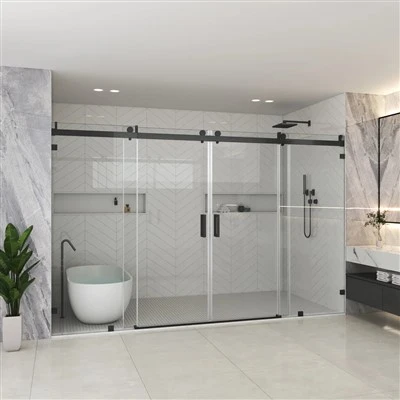
I’ve been doing this for 12 years, and I’ve seen so many clients regret cutting corners on custom enclosures for their curbless showers. The ones who plan ahead end up with a shower that looks amazing, works perfectly, and lasts for decades. If you’re thinking about making this upgrade, hit us up to chat through your space—we’ll walk you through measurements, slope, glass options, whatever you need. No sales pitch, just real advice. It’s your bathroom, make it work for you.
Shower Base References
National Kitchen and Bath Association. (2022). Shower Enclosure Reliability and Installation Trends.
U.S. Department of Housing and Urban Development. (2021). Accessible Bathroom Design Guidelines for Curbless Showers.
Glass Association of North America. (2020). Tempered Glass Performance for Wet Area Enclosures.
MCOCOD LLC
MCOCOD LLC is a USA-based custom shower enclosures supplier, mainly engaged in providing high quality custom glass doors and frameless tempered glass. We warmly welcome you to buy durable custom shower enclosures in stock here online! If you have any enquiry about installation and free shipping, please feel free to email us.
Address: 12781 Schabarum Ave Irwindale, CA 91706
E-mail: info@usamcocod.com
WebSite: https://www.mcocodplus.com/
