If you’ve ever worked with injection molding, you’ve probably heard of ejector pins—those tiny metal rods that pop a finished part out of a mold. But if you’re dealing with a Special Structure Mold (you know, the ones with weird undercuts, rotating cores, multi-layer inserts, or parts that bend the rules of standard molding), ejector pins aren’t just a “set it and forget it” afterthought. They’re not just there to push the part out; they’re basically the unsung heroes that make those tricky molds actually work, and if you get them wrong, you’ll end up with broken parts, scratched surfaces, or a mold that needs repairs every other run. Special Structure Mold
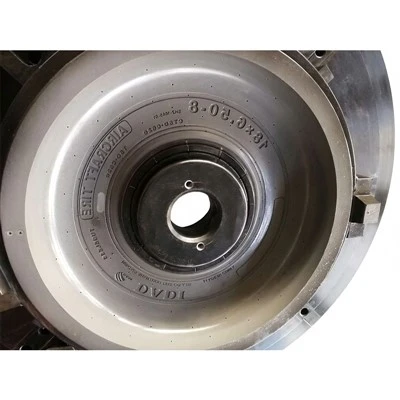
Let me start with a quick heads-up: I’m from a mold shop that specializes in those “impossible” molds. You know the ones—our clients come to us with parts that have hidden features, like a spiral internal thread, a part that wraps around a sharp corner, or components that need to hold tiny inserts in place during molding. A lot of times, their first question is, “Can you even make this mold?” But after we nail the core and cavity design, the next big hurdle is figuring out how to get the part out without messing it up. That’s where ejector pins step in, and for Special Structure Molds, they do way more heavy lifting than in a regular, run-of-the-mill mold.
First, let’s talk about the basics for regular molds, just to set the bar. In a standard box-shaped part, ejector pins are usually uniform, spaced evenly around the perimeter, push on the thickest, most rigid areas of the part, and they’re pretty interchangeable. But Special Structure Molds? Nothing about that design is standard, so your ejector pins can’t be either. Let’s break down their key roles here, because it’s not just “ejection.”
One of the biggest things we deal with at my shop is undercuts—those little protrusions or indentations that are designed into a part so it doesn’t pull straight out of the mold. A regular mold might have a side action that slides to pull the undercut out, but sometimes you need ejector pins that work with that side action, not against it. For example, last year we made a mold for a medical device part that had a tiny L-shaped undercut on one side. If we’d used standard ejector pins, they’d have pushed on the undercut area, which was thin and would have warped the part. Instead, we used custom-shaped ejector pins that matched the L of the undercut, so when the side action retracted the undercut first, the pins aligned perfectly to push the rest of the part without touching that weak point. That’s a game-changer—if you don’t design the pins to sync with the moving parts of a Special Structure Mold, you’ll have parts that stick or break mid-run.
Another role: surface quality, which is non-negotiable for a lot of the parts we work with. A lot of Special Structure Molds are for consumer electronics, automotive interior trim, or medical parts where the surface can’t have a single scratch. Standard ejector pins leave tiny round marks, which are fine for a hidden undercarriage part, but not for a smartphone casing or a car door panel. So we use ejector pins with custom shapes—like flat, rectangular, or even contoured to match the part’s curve. Wait, we also use something called “pin on demand” tech sometimes, where small pins pop out only in the areas that don’t show. For a special structure mold with a curved front face, we didn’t put a single pin on the front; instead, we placed them along the back ribs, which don’t matter for aesthetics. That’s a specific role for ejector pins in these molds: preserving part finish when standard marks are a dealbreaker.
Then there’s ejector alignment and part stability. Special Structure Molds often have very thin walls or intricate internal features—like a part with a hollow core or tiny internal baffles. If your ejector pins are even a millimeter out of line, they can push on the wrong spot, bend a thin wall, or even break a core pin inside the mold. We once had a client bring in a mold they’d made themselves for a tiny aerospace component with a thin internal spline. The ejector pins were misaligned, so every 10 runs, they’d break the spline. We replaced those standard pins with precision-ground pins that had a pilot diameter matching the internal spline, so they only pushed on the thick outer rim of the part. That fixed their issue immediately. For these molds, ejector pins aren’t just ejection tools—they’re a way to stabilize a delicate part during ejection, so it doesn’t flex mid-push.
Wait, also, ejection force. Special Structure Molds have more resistance than standard ones because of those unique features—undercuts, tight tolerances, even different plastic resins that stick more. If you use the same ejector force as a regular mold, you’ll either get stuck parts or damaged ones. We design ejector pin arrays to distribute force evenly, so we don’t have to crank up the pressure. For example, a mold for a multi-layer food container (another special structure) has two nested parts, so the inner part can get stuck to the outer one. We added small, redundant ejector pins between the layers, spaced just right, to apply even force and separate the inner part without distorting the outer one. That’s a role you don’t think about until you mess it up: force distribution to prevent part damage that would come from uneven pushing.
Now, let’s talk about common mistakes people make with ejector pins on Special Structure Molds, because that’s where we see a lot of repeat issues. First, using off-the-shelf pins instead of custom ones. A lot of mold shops will just grab standard pins from a catalog, which works for simple molds, but not for anything special. Last quarter, we got a rush job from a shop that had a mold for a sports equipment part with a complex spiral undercut. They’d used standard round pins, so when they ejected the part, the spiral would catch on the pins, twisting the part so bad it was useless. We made custom, shaped pins that followed the spiral’s contour, and their defect rate dropped from 30% to under 2%. That’s the difference—off-the-shelf is cheap, but for special structures, it won’t cut it.
Second, ignoring ejector pin material. Special Structure Molds might run high-temperature resins, or have corrosive materials in the part, or run thousands of cycles. Standard steel pins can wear down quickly, or leave marks on high-temperature plastics. We use hardened stainless steel pins for medical or food-grade parts, because they don’t corrode, and tungsten pins for molds that run thousands of cycles, because they’re way more durable. We once had a client whose mold for a battery component (which uses a corrosive plastic) had standard pins that pitted after 500 runs, leaving marks on the part. Swapping to stainless pins fixed that. Material is a detail that matters here, not just the shape.
Third, not designing ejector pins with mold maintenance in mind. A lot of times, shops design pins so they’re hard to replace, which is a nightmare when a pin wears out or breaks. For Special Structure Molds, the pins have to be accessible—we make sure they’re arranged so you can pull them out with a simple tool, no disassembly of the entire mold. I’ve seen shops make molds where the ejector pins are hidden behind internal cores, so replacing a single pin takes 4 hours of tearing the mold apart. That adds so much downtime. For us, that’s a non-negotiable: every ejector pin in a special structure mold is serviceable without major teardowns.
So let’s circle back to the big picture here. When you’re working with a Special Structure Mold, every component matters, but ejector pins are often the most underrated. They’re not just a mechanism to push a part out; they sync with moving cores and slides, protect surface finishes, stabilize delicate parts, distribute force to prevent damage, and make maintenance easier. Mess them up, and even the most perfect mold design will produce garbage parts. Get them right, and the mold runs smoother, has less downtime, and produces higher-quality parts.

At the end of the day, if you’re dealing with a special structure mold—something with undercuts, intricate details, tight tolerances, or parts that don’t fit the standard mold playbook—don’t treat ejector pins like an afterthought. A lot of mold shops will cut corners here, but we specialize in these tricky designs, and we can help you get those ejector pins right so your mold runs consistently, no more broken parts or high defect rates. If you’re working on a new project or having issues with an existing special structure mold, hit us up to talk through what you need. We can walk through your part’s unique features, figure out the right ejector pin design, and make sure the entire mold works as it should.
Two Piece Mold References:
- Rosato, D. V., & Rosato, M. G. (2004). Injection Molding Handbook. Kluwer Academic Publishers.
- Groover, M. P. (2020). Fundamentals of Modern Manufacturing: Materials, Processes, and Systems. Wiley.
- Bralla, J. G. (1999). Design for Manufacturability Handbook (2nd ed.). McGraw-Hill.
Anhui Varon Mould Co., Ltd.
We are one of the most professional special structure mold manufacturers and suppliers in China, also support customized service. We warmly welcome you to wholesale premium special structure mold made in China here from our factory. If you have any enquiry about cooperation, please feel free to email us.
Address: Anhui Province, Ningguo City, Economic and Technological Development Zone, Heli Industrial Park, Dongcheng Avenue
E-mail: admin@varonmould.com.cn
WebSite: https://www.wanlongmold.com/
