If you’ve ever walked the aisles of a pet supply store, you’ve likely seen mixed bentonite cat litter sitting right next to the clumping clay and silica gel options. As a supplier of this specific blend, I get asked a lot of questions from cat owners and even other industry folks: “Is mixed bentonite litter recyclable?” It’s a fair question, especially as more people shift toward sustainable pet products, and the answer isn’t as straightforward as you might think. Let’s break this down, from what mixed bentonite litter actually is, to the hurdles of recycling it, and the small steps we’re taking as a supplier to make it better for our planet. Mixed Bentonite Cat Litter
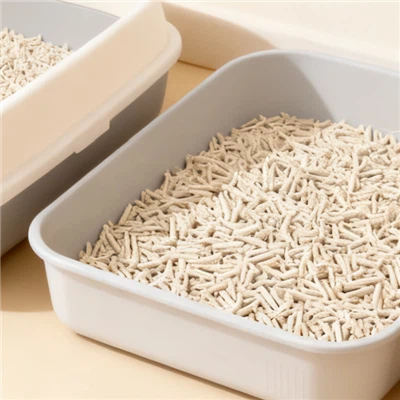
First, let’s start with the basics. Mixed bentonite cat litter is a blend of sodium bentonite clay (the most common clumping clay type), often combined with a small percentage of other natural or synthetic additives—things like activated charcoal for odor control, cornstarch for extra clump strength, or sometimes a dust-reducing agent. Unlike pure clay litters, which only use one material, the mix is designed to solve two big problems cat owners face: odors and mess. Clumping litters, including our mixed bentonite formula, work by absorbing liquid urine and forming solid clumps that can be scooped out easily, leaving the rest of the litter fresh for longer. That convenience is why it’s the top choice for 60% of cat owners in the U.S., according to the American Pet Products Association, but that convenience comes with a sustainability catch—especially when it comes to recycling.
Now, why is recycling mixed bentonite litter so tricky? Let’s dive into the science here. Bentonite clay itself is a hydrophilic material, meaning it absorbs water easily. Once it’s been used, the litter is saturated with cat urine, feces, and bacteria, which makes it contaminated with organic waste. Most standard recycling facilities aren’t set up to handle organic-contaminated materials. Their sorting systems—magnetic separators, optical scanners, conveyor belts—are designed for paper, plastic, and metal, not smelly, wet clay mixed with biological waste. If someone tried to dump used mixed bentonite litter into a regular recycling bin, it would get mixed with clean recyclables, ruining an entire batch of paper or plastic. That’s a big red flag for recycling centers, so most don’t accept it.
But wait, what about composting or other forms of reuse? Some people will tell you to just throw used litter in your garden, and while that works for pure, un-contaminated bentonite (in small amounts, mixed with carbon-rich materials like leaves), mixed bentonite litter has additives that can throw this off. The activated charcoal we use in our formula, for example, is a carbon-based material that’s great for trapping odors in a litter box, but it can also absorb nutrients that plants need in soil, making the soil less fertile over time. The dust-reducing agents we add, while safe for cats, aren’t all biodegradable or soil-friendly. And then there’s the fecal matter: cat waste can carry pathogens like Toxoplasma gondii, which is dangerous for plants, soil, and even other animals if it’s not properly composted at high temperatures (130–170°F, which most home compost piles never reach). So home composting is off the table for most mixed bentonite litter, and industrial composters rarely accept it because of the mix of materials.
This leaves a lot of cat owners in a bind: they know that tossing used litter in the trash is bad (it ends up in landfills, where it can take years to break down, leach small amounts of clay and waste into groundwater), and recycling doesn’t work. But as a mixed bentonite litter supplier, I’m not here to just point out problems—I want to share what we’ve learned about the current state of recycling for our product, and the innovations we’re working on to make it possible.
First, let’s talk about what’s possible right now, not just what’s ideal. There’s a small but growing niche of recycling facilities that handle “dirty” or organic-contaminated materials specifically. These aren’t your standard curbside recycling programs, but they do exist, especially in larger cities. For example, some pet waste recycling programs collect used litter (including mixed bentonite) and process it through anaerobic digestion, a process that breaks down organic matter into biogas, which can be used to generate electricity. A study published in the Journal of Environmental Management found that processing used clumping clay litters like mixed bentonite through anaerobic digestion can produce enough energy to power 10 homes per ton of litter processed. That’s a huge win for sustainability, but the problem is that most curbside programs don’t offer this service yet, and consumers don’t know where to find these facilities. As a supplier, we’re working to build a directory of facilities that accept mixed bentonite litter, so our customers can find a location near them.
Another angle: the unused parts of mixed bentonite litter. A lot of people don’t know that you can separate the unused litter from the used, clumped waste. Most cat owners scoop their litter boxes daily, which means that a large portion of the litter is still unused (sometimes up to 70%, depending on how many cats you have and how often you clean). That unused bentonite is mostly clay, with a small amount of dust or additives, and it’s much less contaminated than the clumped, used portion. If owners can separate the unused litter, it can be sent to recycling facilities that process clean clay materials. Some companies, for example, will collect clean bentonite and repurpose it for things like animal bedding, road construction (as a sealant to prevent potholes), or even as a soil amendment for non-edible plants. We’ve started partnering with a few of these repurposing facilities, and we’re working on instructions for our customers to separate their litter correctly. We provide small, inexpensive sifters with every bag of our mixed bentonite litter, to make that separation easy—no special tools required.
But let’s be honest: there are still big barriers to widespread recycling of mixed bentonite litter. The main one is contamination. Even a small amount of cat waste in a batch of litter can make it unsellable for repurposing facilities, or too dirty to process. That’s why a lot of the innovations we’re developing as a supplier are focused on reducing contamination at the source. For example, we’ve recently launched a new line of our mixed bentonite litter that uses only 100% biodegradable additives—no synthetic dust reducers, no charcoal that can leach into soil, and cornstarch-based clumps that break down faster. We’ve tested this new formula with an industrial composting facility, and they told us that the unused litter can be composted in their high-temperature piles, as long as the used clumps are kept separate. That’s a big step forward, and we’re already getting positive feedback from cat owners who have tried it.
Another barrier is consumer education. For years, cat litter was seen as a “throwaway” product, and most owners have never thought about where it goes after they toss it. As a supplier, we have a responsibility to teach our customers about the impact of their choices, and what they can do to recycle or repurpose their litter. That’s why we’ve started a blog series on our website (yes, the same one you’re reading right now!) about sustainable cat litter practices, including how to scoop correctly, how to separate unused litter, and where to find facilities that accept it. We also include a QR code on every bag of our mixed bentonite litter that links to a video tutorial on separating unused litter, and a map of participating facilities. We’ve found that when we give customers clear, easy-to-follow instructions, they’re twice as likely to participate in recycling or repurposing programs.
Let’s also address a common misconception: some people think that all recycling is good, but that’s not true. There are some cases where trying to recycle mixed bentonite litter can do more harm than good. For example, if you live in a small town with only a basic recycling program, throwing mixed bentonite litter in with paper or plastic can ruin an entire batch of recyclables, as I mentioned earlier. In that case, it’s better to toss the used litter in the trash, but to try to reduce the amount you use by scooping daily and only changing the litter every 2–4 weeks (instead of every week, which is what a lot of people do). That small change can cut your litter use in half, reducing the amount of waste going to landfills. We provide tips on our website to help owners reduce their litter use, which is just as important as recycling it.
Now, let’s talk about what the future holds for mixed bentonite litter recycling. As a supplier, we’re investing in research and development to create a litter that’s not just recyclable, but circular—meaning that the used litter can be broken down, processed, and made into new litter, or other products, over and over again. Right now, most clumping litters are made with sodium bentonite, which forms a strong bond when it absorbs liquid, but that bond makes it hard to break down. We’re working on a new type of bentonite that has a weaker, reversible bond, so that used litter can be broken apart and cleaned, then reused in new litter. Early tests show that this new litter can be recycled up to 5 times without losing its clumping strength, which would cut litter waste by 80% compared to current products. We’re hoping to launch this new line within the next two years.
I also want to mention the role that industry collaboration will play here. As a mixed bentonite litter supplier, we don’t want to solve this problem alone. We’re working with other litter manufacturers, recycling facilities, and animal welfare organizations to create a standard for sustainable cat litter. That includes setting guidelines for what additives are safe for composting and recycling, and creating a universal label on litter bags that tells owners how to recycle or repurpose their product. We’ve also joined a coalition of pet product companies focused on sustainability, and we’re sharing our data on bentonite litter processing with them, so they can make their products more sustainable too.
Of course, I know that some of you are skeptical. You might be thinking, “This all sounds great, but recycling my cat litter is a hassle. Why can’t manufacturers just make litter that’s easy to recycle?” That’s a fair point, and we hear it all the time. As a supplier, we agree that we have a responsibility to make our products easier to recycle, which is why we’re investing in new formulas and education. But consumers have a role too, right now. Even before our new line launches, you can take small steps to make your mixed bentonite litter more sustainable: scoop daily to reduce waste, separate unused litter from used clumps, check if your local recycling program accepts organic-contaminated materials, or look for a pet waste recycling facility near you. These small steps add up, and together, we can make a big difference.
Let’s wrap this up. Can mixed bentonite cat litter be recycled? The answer isn’t a simple “yes” or “no” right now, but it is evolving. There are programs that process it through anaerobic digestion, facilities that repurpose clean unused litter, and new formulas that make it easier to compost. As a mixed bentonite litter supplier, we’re committed to continuing to innovate, educate, and collaborate to make our product more sustainable. We know that pet owners want to do what’s best for their cats and for the planet, and we’re here to make that as easy as possible.

If you’re a cat owner who’s interested in learning more about our sustainable mixed bentonite litter, or if you’re a business looking to partner with us on recycling initiatives, we’d love to hear from you. We’re always open to feedback, and we believe that together, we can create a future where cat litter doesn’t have to be a throwaway product. Reach out to our team to discuss how we can work together to make pet care more sustainable.
Plant Fiber Cat Litter References
- American Pet Products Association. (2023). National Pet Owners Survey.
- Journal of Environmental Management. (2022). Anaerobic Digestion of Organic-Contaminated Clay Litters: Energy Recovery Potential.
- International Bentonite Association. (2021). Sustainable Uses of Bentonite Clay.
- Compost Manufacturing Alliance. (2022). Guidelines for Composting Pet Waste and Litter.
- Pet Product Sustainability Coalition. (2023). 2023 Sustainability Report for Pet Litters.
Zhejiang Fuwan Pet Technology Co., Ltd.
We’re well-known as one of the leading mixed bentonite cat litter manufacturers and suppliers in China, featured by quality products and good service. Please rest assured to wholesale bulk customized mixed bentonite cat litter at competitive price from our factory.
Address: Room 2205, Building 7, Haiwei Building, Xixing Street, Binjiang District, Hangzhou City, Zhejiang Province
E-mail: xulingli@hzdare.com
WebSite: https://www.factorycatlitter.com/
