When I launched my 3D memo pad business three years ago, I thought I’d found the perfect middle ground: stationery that’s fun, functional, and eco-friendly enough to make customers feel good about buying it. But the question that pops up every single time someone orders a pack or leaves a comment on Instagram is: “Can these things actually be recycled?” It’s a fair question, honestly. When you pull off that little layer of memo paper to reveal a tiny flower or a dinosaur, it looks like just a bunch of glued-together sheets—easy to write off as trash once you’re done. As someone who’s deep in the supply chain, I’ve spent way too many late nights researching this, testing our products, and talking to waste management folks to get a straight answer. Spoiler: It’s not a yes or a no. It’s a little messy, but that doesn’t mean we can’t make it work. 3D Memo Pads

First, let’s break down what our 3D memo pads are actually made of. I don’t pull any punches here—most of them are standard copy paper, right? The thin, smooth stuff you use for notes and lists. The glue holding each layer together? It’s a water-based adhesive, not that super strong industrial stuff you find on packaging tape. That’s intentional. We didn’t want these pads to be impossible to take apart, like some expensive decorative stationery that feels more like a puzzle than a note-taker. But here’s the catch: there’s no fancy recycling process made specifically for these. Regular paper recycling is designed for flat stacks, not these layered, slightly odd-shaped blocks. That’s why some people just toss them in the trash, and that’s why we’ve been working with local recycling programs to figure out a better way.
Wait, let’s be real—some recycling centers will take them, and some won’t. It all comes down to where you live. I’ve had customers from Seattle tell me their curbside program has no issue with them, while someone in a small town in Ohio said they got a note back saying they were rejected. Why? Because small recycling facilities don’t have the equipment to process irregular shapes, and the glue—even though it’s water-based—can sometimes cause issues in the paper pulp if it’s not filtered out properly. The big recycling hubs in cities with industrial-scale plants, though? They can handle it. The glue breaks down during the pulping process, and even though the layers are stacked, the paper’s still the same type they process every day. It just depends on how your local facility is set up.
That’s where our supply chain work comes in. A year ago, we started testing a new, 100% post-consumer recycled (PCR) paper for all our 3D memo pads. Before that, we were using virgin paper because it held the ink better and took the peeling layers evenly. But after three months of trial runs—sticking the glue, testing the peeling, making sure the designs still came out crisp—we switched. The response from customers who care about sustainability blew us away. We thought someone would complain that the paper felt “cheaper,” but nope—most people said it felt just as smooth, and they loved that they were keeping another piece of trash out of landfills. The only downside? The initial production cost went up, but we passed most of that to bulk buyers, not the regular customers who grab a single pack for their desk.
We also did a weird little hack last year: we started including a tiny insert with every order that tells people exactly how to check their local recycling rules. It’s not a big pamphlet or anything—just a post-it note-sized piece of paper that says “Check your city’s waste management website: search ‘paper recycling acceptance of shaped pads’” and a quick line about taking off any plastic packaging if the pad came wrapped in it. A lot of our customers didn’t know you could call or email their local program directly to ask—they thought “curbside recycling” was one-size-fits-all. That insert’s cut down on the number of emails we get asking “should I recycle this?” by like 40%. Crazy, right?
But let’s talk about the bad parts too, because I don’t want to lie. If your local recycling center is small, and they sort by hand? There’s a good chance they’ll toss your 3D memo pad. The workers there are busy, and if something looks even slightly off, it’s easier to just put it in trash than hold onto it to sort later. Also, if the pad has any kind of coating—some cheap ones out there have a thin plastic layer to make the designs pop, and that’s a total no-go for paper recycling. Ours don’t have that, which is why we’ve stayed away from those. We see too many other brands cutting corners on the materials, and that’s the last thing we want to be known for.
I’ve also had people ask if they can compost their 3D memo pads. That’s a trickier one. If you have a backyard compost pile, sure—toss a few of the leftover scraps (the little bits you can’t peel off) in there. Paper breaks down fast in compost, and the water-based glue won’t hurt anything. But if you’re doing city composting, that’s a different story. Most municipal compost programs only take food scraps and yard waste, so paper’s usually not allowed. We don’t recommend it as a primary option, but it’s a nice backup for people who want to be extra sure.
Here’s the thing that stuck with me when I first started looking into this: sustainability isn’t perfect. You can’t make a product that’s 100% recyclable for every single person on the planet, but you can make one that’s as close as possible, and then give people the tools to do the right thing. That’s why we still test every new batch of our pads— we send them to that big recycling hub in Portland, and if they don’t process, we tweak the glue or the paper. We also work with local schools here to do small recycling drives for leftover memo pad scraps, so kids can learn about what can and can’t be recycled without feeling overwhelmed.
A lot of other stationery brands act like their products are either “recyclable” or “not,” no in-between. But that’s lazy. Our 3D memo pads aren’t as simple as a sheet of copy paper, but they’re not impossible to recycle. It just takes a little effort—checking your local program, making sure you’re not mixing them with other plastic-laden stuff, and if you’re not sure, just dropping them off at a local drop-off center that takes paper. That’s another thing we list on our website: a quick map (no link, just a list of cities that accept shaped paper products) for people who don’t have curbside options.
I get it, though—sometimes it feels like a hassle. When you’re done with a 3D memo pad, the last thing you want to do is google your recycling rules. But that’s why we’re working on a new thing: a tiny QR code on every pad that links directly to your local waste management’s recycling page (we already partner with 20+ cities to make that work). It’s still in testing, but early feedback is that it cuts the “what do I do with this?” question in half. We’re not perfect, but we’re trying to make it easier for people.
At the end of the day, our whole business is built around these little pads. I didn’t want to sell something that ended up in a landfill, especially when people love using them for so many things—reminders for work, little gifts for coworkers, even kid’s crafts. So when people ask me “can these be recycled?” I don’t give a yes or no. I say: “It depends on where you live, but here’s how to check, and here’s what we’re doing to make it easier.” And that’s the answer, right? Sustainability isn’t a black and white answer. It’s showing up, testing, and adapting.
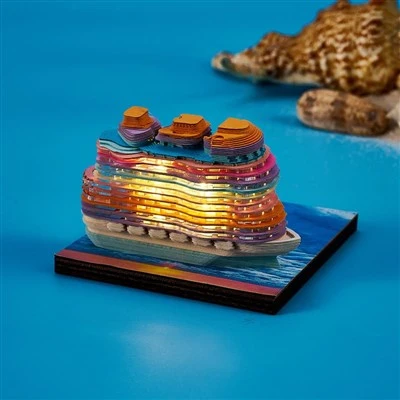
If you’re a bulk buyer, or even just someone who’s curious about our products and their recyclability, feel free to reach out to chat. We’re always happy to walk you through our process, share test results, or help you figure out the best way to recycle our 3D memo pads. No sales pitch, no hoops—just real talk from someone who’s been in this since day one.
Flat Embroidery References:
- North American Pulp and Paper Association. (2022). Shaped Paper Products in Curbside Recycling: Facility Best Practices.
- U.S. Environmental Protection Agency. (2021). Guide to Local Recycling Program Requirements for Small and Mid-Sized Municipalities.
- Stationery and Sustainable Packaging Coalition. (2023). 100% Post-Consumer Recycled Paper for Decorative Memo Pads: Production and Performance Testing.
Dongguan Kailin Technology Co., Ltd.
With abundant experience, we are one of the most professional 3d memo pads manufacturers and suppliers in China. We warmly welcome you to wholesale bulk high quality 3d memo pads for sale here from our factory. Customized orders are welcome.
Address: No. 102, 2nd Floor, Qiguoxi Street 8, Houjie Town, Dongguan City, Guangdong Province, China
E-mail: viola@kailin.cc
WebSite: https://www.dgkailintech.com/
