If you’ve ever stood near a sintering kiln during a production run, you’ll know that controlling its gas emissions isn’t just a regulatory box to check—it’s about protecting your team, cutting operational costs, and aligning with long-term sustainability goals. As a sintering kiln supplier with 12 years on the ground, I’ve worked with 70+ ceramic, mineral, and metallurgical facilities to fine-tune their emission systems, and I’ve seen firsthand that the best solutions aren’t one-size-fits-all. Many operators approach emission control as an afterthought, installing equipment that doesn’t integrate with their existing kiln, leading to wasted energy, repeated compliance fines, and unnecessary downtime. Today, I’m breaking down the science and practical steps I’ve learned to help you take control of sintering kiln emissions. Sintering Kiln
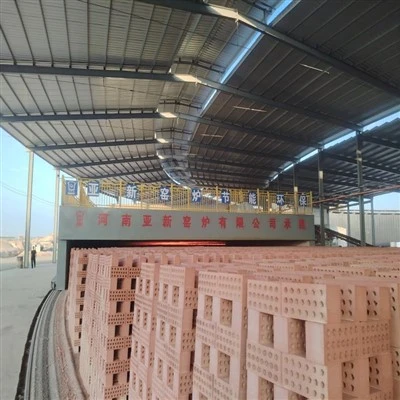
First, let’s ground this in how a sintering kiln works, because emission control starts with understanding the source of the gases. Sintering is a thermal process where raw materials (like iron ore, clay, or alumina powder) are heated just below their melting point to fuse particles into a solid, durable product. During this process, three primary emissions come off: particulate matter (PM, tiny solid particles of unburned fuel, ash, or raw material), nitrogen oxides (NOₓ, formed when nitrogen in air reacts with oxygen at high temperatures), and sulfur oxides (SOₓ, released from sulfur in fuel or raw materials like coal or sulfide ores). A kiln’s design and operational settings directly shape how much of each emission is generated. For example, a kiln running with an uneven fuel-to-air ratio will produce 30% more NOₓ than one running at a balanced, oxidizing or reducing state. Cutting emissions starts here, not with end-of-pipe equipment.
Let’s start with operational adjustments—these are the fastest, cheapest wins, and I’ve had clients reduce emissions by 25% just by tweaking their daily runs. First, optimize fuel combustion. Most sintering kilns run on natural gas, coal, or a mix, but the combustion efficiency directly impacts NOₓ and PM. For natural gas burners, I recommend installing automatic air-fuel ratio controls—old manual adjustments often lead to incomplete combustion, which creates more PM and unburned hydrocarbons (VOCs that count toward emissions too). A client in Ohio was manually adjusting their burner, leading to 1,200 ppm of NOₓ; after installing a digital ratio controller, they cut that to 750 ppm in 2 weeks. For coal-fired kilns, the key is milled fuel size: if coal particles are too large, they don’t burn fully, increasing PM; if too small, they burn too fast, spiking flame temperatures and boosting NOₓ. I work with operators to adjust coal mill output so 80% of particles fall between 50 and 75 microns—this balance cuts both PM and NOₓ without extra equipment.
Next, control kiln temperature zones. Sintering requires a specific thermal profile, but overheating any section is a major emission driver. NOₓ forms at temperatures above 1,800°F, so limiting peak flame temperatures can reduce NOₓ by 15-20%. How? Install zone-based temperature sensors along the kiln’s length (the preheating, sintering, and cooling zones) rather than just a single sensor at the exit. One client in Mexico was running their sintering zone 200°F too hot to meet production speed; adding zone sensors let them lower the temperature by 150°F, hit their production target, and cut NOₓ by 22%. Also, the cooling zone is often overlooked: hot exhaust from this zone (around 1,000°F) can be recycled back into the preheating zone, reducing the need to burn extra fuel and lowering overall emissions. I’ve saved clients up to 10% on fuel costs and emissions with this simple loop.
Now, when operational adjustments aren’t enough, end-of-pipe emission control technologies come into play— but choosing the right one depends on your kiln’s emission profile and your facility’s space and budget. Let’s break down the most effective options, with lessons from my work installing these systems.
For particulate matter, the workhorse is a baghouse filter (or fabric filter). Baghouses use woven or felted fabric bags to trap PM as gas flows through them, and they’re more efficient than older electrostatic precipitators (ESPs) for most sintering applications—they can catch 99.9% of PM, even fine particles under 1 micron. A common mistake I see is operators choosing a baghouse with the wrong fabric for their gas: ceramic kilns have high moisture and temperature, so polyester bags will degrade in 6 months. Instead, I recommend aramid or PTFE (Teflon-coated) bags, which withstand up to 500°F and resist moisture. One ceramic plant in Pennsylvania replaced their 10-year-old ESP with a PTFE baghouse, and their PM emissions dropped from 45 mg/Nm³ to 8 mg/Nm³—way below their state’s 20 mg/Nm³ limit.
For NOₓ control, two main technologies work for sintering kilns: low-NOₓ burners and selective non-catalytic reduction (SNCR). Low-NOₓ burners modify the flame to reduce peak temperatures and limit nitrogen-oxygen reaction—they’re ideal for new kilns or retrofits where you don’t want major structural changes. For existing kilns with higher NOₓ levels, SNCR is a cost-effective add-on. SNCR injects a urea or ammonia solution into the kiln’s high-temperature zone (1,600-2,000°F), where it reacts with NOₓ to form harmless nitrogen and water. I’ve seen SNCR systems cut NOₓ by 50-70% in 6 months, with payback periods as low as 18 months. A metallurgical plant in Australia had NOₓ levels of 1,500 ppm; after installing a SNCR system with a customized injection layout (rather than a one-size-fits-all nozzle), they hit 400 ppm, complying with national regulations without shutting down the kiln for more than 3 days.
SOₓ control is simpler, as it only comes from fuel or raw materials. If you’re using high-sulfur coal, switching to low-sulfur natural gas or a coal blend with <1% sulfur will cut SOₓ by 80%—and natural gas is often cheaper for kiln runs, so it’s a double win. If you can’t switch fuel, adding a wet scrubber at the kiln’s exit will neutralize SOₓ with a lime or caustic soda solution. Just make sure the scrubber is sized for your gas flow; an undersized scrubber won’t capture enough SOₓ, and an oversized one wastes water and energy.
A key part of controlling emissions that I emphasize to every client is regular maintenance and monitoring. Even the best equipment won’t perform if it’s not checked monthly. For baghouses, clogged bags raise pressure drop, increasing fuel use and reducing PM capture— I set clients up with a weekly pressure log, and if pressure rises 10% above baseline, we clean or replace bags. For emission monitoring, continuous emissions monitoring systems (CEMS) are not just regulatory requirements—they let you track emissions in real time, so you can adjust operations before levels spike. One client in Brazil was hit with a $50,000 fine because their PM spiked overnight; adding CEMS alerts to their operations team meant they caught the issue within 1 hour, avoiding future fines.
Now, let’s talk about scaling this to meet future regulations. Many regions are tightening emission limits—for example, the EU’s Industrial Emissions Directive will cut sintering kiln NOₓ limits by 40% by 2030, and the U.S. EPA has proposed new rules for industrial kilns. As a supplier, I’ve worked to develop modular emission systems that grow with your facility: a kiln that starts with low-NOₓ burners can add SNCR later, and a basic baghouse can upgrade to a hybrid ESP-baghouse for even finer particle control. This avoids the cost of a full system replacement every few years.
I’ve seen too many operators write off emission control as a drain on profits, but the opposite is true: better emission systems reduce downtime, cut fuel costs, and avoid costly fines. Take a client in South Africa: they invested $120,000 in a modular baghouse and low-NOₓ burners, and within a year, they saved $90,000 in fuel costs, avoided a $30,000 fine, and increased kiln availability by 5% because the new equipment required fewer repairs. That’s a return on investment in 14 months—something every plant manager cares about.
If you’re currently struggling with sintering kiln emissions—whether you’re hitting compliance hurdles, seeing rising operational costs, or planning a kiln upgrade— I can help. Every facility’s kiln is unique, so a one-off solution won’t work. I work with teams to audit your current system, identify emission sources, and build a customized plan that balances performance, cost, and sustainability. Don’t wait for a regulatory fine or unplanned downtime to address your emissions; reach out to discuss how we can tailor a solution for your operation.
Tunnel Kiln References
- U.S. Environmental Protection Agency. (2022). Control Techniques for Industrial Kiln Emissions. EPA 456/R-22-003.
- International Organization for Standardization. (2021). ISO 14095:2021, Thermal Process Emission Control for Metallurgical and Ceramic Sintering Kilns.
- World Business Council for Sustainable Development. (2020). Low-Carbon Sintering: Operational and Technological Solutions for Industrial Emission Reduction.
- European Commission. (2023). Best Available Techniques (BAT) Reference Document for Large Combustion Plants and Industrial Kilns.
- National Institute for Occupational Safety and Health. (2021). Particulate Matter and NOₓ Exposure Controls for Sintering Kiln Operations. NIOSH Publication 2021-107.
Henan Yaxin Kiln Co., Ltd.
Henan Yaxin Kiln Co., Ltd. is one of the most professional sintering kiln manufacturers and suppliers in China. With abundant experience, we warmly welcome you to buy high quality sintering kiln with the latest design from our factory. Good service and punctual delivery are available.
Address: Jixian Industrial Zone, Shangqiu City, Henan Province
E-mail: 1543563178@qq.com
WebSite: https://www.hnyxkiln.com/
