When I first started as an enameled flat wire supplier back in 2012, most of my orders came from automotive component manufacturers and small appliance makers. Back then, I never imagined someone would ask me if our ultra-thin, precision-wound flat wire could play a part in the aerospace industry. For years, aerospace wiring was dominated by round wire—its long-standing presence made it seem like the only viable option for high-stakes, high-altitude applications. But over the past decade, I’ve worked with three different aerospace engineering teams to test our flat wire products, and today I can confidently say: yes, enameled flat wire isn’t just a good fit for aerospace—it’s solving problems round wire never could. Enameled Flat Wire

Let me start with what makes aerospace wiring non-negotiable. When you’re 35,000 feet up, tens of thousands of feet above the nearest rescue, every component has to pull its weight. Aircraft have to cut through turbulent air, deal with extreme temperature swings (from -60°F at cruising altitude to 150°F in engine bays), and withstand constant vibration from engines and wind. The wiring that runs critical systems—flight controls, communication, power distribution, even cabin lighting—can’t fail, period. Round wire has been the go-to because it’s flexible, easy to terminate, and has a proven track record, but it has two big flaws that aerospace engineers have been grappling with for years: wasted space and higher weight.
Round wire takes up a lot of room in wire bundles. Because of its circular cross-section, when you bunch multiple strands together, there are gaps between them—empty space that adds bulk and weight. Our enameled flat wire, by contrast, has a rectangular profile that lets engineers pack strands tightly together, almost eliminating those gaps. I remember in 2019, a team from a regional aerospace firm reached out to me because they were working on a new commuter jet’s auxiliary power unit (APU). Their round wire bundles were so thick, they had to redesign the APU housing three times to fit the wiring, adding 12 extra pounds to the unit. That might not sound like much, but for a commuter jet that flies 80 routes a day, 12 pounds translates to hundreds of gallons of extra fuel burned each year—fuel that adds up to six-figure costs over the jet’s lifetime, plus unnecessary carbon emissions. We sent them samples of our 22-gauge enameled flat wire, and when they tested it, they were able to reduce their wire bundle cross-section by 28% and cut the APU’s wiring weight by 9 pounds. That was a turning point for me; it showed aerospace wasn’t just open to flat wire—it needed it.
But weight savings and space efficiency aren’t the only wins. Aerospace wiring also has to handle extreme environmental stress, and that’s where the quality of the enamel insulation matters most. Not all enamel is created equal. When I first started working with aerospace teams, I made the mistake of offering standard polyurethane enamel, which works great for consumer electronics but falls apart at high temperatures or when exposed to jet fuel and hydraulic fluid. Aerospace enamel has to meet strict standards—like the SAE AS23519 specification for wire insulation, which requires resistance to temperatures from -55°C to 200°C, plus resistance to 100+ hours of exposure to aviation fluids, and the ability to withstand 15g vibration loads for thousands of flight hours. We didn’t just adjust our enamel formula when aerospace teams asked; we invested two years in R&D to develop a modified polyimide enamel that meets all SAE and FAA requirements, and has a 30% higher dielectric strength than standard aerospace round wire insulation.
Another big challenge in aerospace is signal integrity. Modern aircraft rely on dozens of sensors, GPS, and communication systems that send tiny electrical signals across wiring bundles. Round wire, with its circular shape, is more prone to electromagnetic interference (EMI) when other nearby wires carry high-power signals. The flat profile of our enameled flat wire lets engineers route signal-carrying wires further apart from power wires, or group them in a way that minimizes crosstalk without wasting space. In 2021, a team working on a small satellite’s payload system contacted us because their sensor signals were getting corrupted by the power wiring, leading to false readings that threatened the mission. They tried shielding the power wires, but that added more weight and bulk. With our flat wire, we were able to arrange the sensor and power wires in alternating flat layers, which reduced EMI by 42% during testing, without adding any shielding. That satellite is still in orbit today, collecting data for climate research—proof that flat wire can work in even the most demanding aerospace environments, beyond commercial jets.
Of course, I know there are still skeptics. Some aerospace engineers worry that flat wire is too stiff for tight bends, or that terminating it (connecting it to connectors or other components) is more difficult than round wire. For a long time, that was a fair concern. Early flat wire designs had sharp edges that made tight bends hard without damaging the enamel, and standard crimp terminals for round wire didn’t fit flat profiles. But over the past five years, we’ve collaborated with aerospace connector manufacturers to develop custom terminals for flat wire, rounded the edges of our flat wire to reduce stress during bending, and even created a thin, flexible version of our enameled flat wire that can bend through 180° with no enamel damage—perfect for areas that need tight, repeated turns, like the wing control systems that move with every flight. We tested that flexible flat wire for 10,000 bend cycles in 2022, and the insulation showed no signs of cracking or degradation. I’ve even had one engineer tell me that once they switched to our flat wire for the wing flaps, they reduced maintenance costs by 15% because the wiring was less likely to fray or break from vibration.
I also want to be transparent about the challenges we still face as a flat wire supplier for aerospace. The certification process is slow and rigorous—you can’t just send a sample and get approved overnight. The FAA requires every component to have a full traceability record, from the raw enamel we use to the copper alloy in the wire core. We had to implement a new quality control system in 2020 just to meet that traceability requirement, which meant investing in new testing equipment and training every member of our quality team. Also, aerospace orders are much smaller and more custom than the automotive orders I’m used to. A typical automotive order might be 10,000 feet of the same wire; an aerospace order could be 500 feet of a custom width, with a specific enamel color, to match a wiring diagram. That means we can’t rely on mass production—we have to keep small-batch manufacturing lines running, which has higher per-unit costs, but it’s worth it because we’re supporting projects that change how we travel and explore.
Let me share a personal story that stuck with me. Last year, I was invited to tour a small aerospace startup that’s building electric vertical takeoff and landing (eVTOL) aircraft, the kind that could be used for urban air taxi services in the next five years. Their engineers showed me the prototype wiring harness for their electric motors, which had to be light enough to keep the aircraft’s total weight down, but strong enough to handle 1,000 horsepower. They were using round wire, but when I looked at their harness, I could see the gaps between the wires—wasted space that they were filling with extra insulating tape, adding more weight. We took a sample of our enameled flat wire, wound it to match their motor’s coil design, and tested it. The results were almost too good to be true: the coil was 22% smaller, 18% lighter, and had a 10°C lower operating temperature because the flat wire’s larger surface area dissipates heat better. The startup’s lead engineer told me that if they could use our flat wire in their production models, they could add one extra passenger to each flight—something that would make their service much more profitable. That’s the kind of impact that makes every late night in our R&D lab worth it.
I think a lot of people outside the aerospace industry assume that all wiring is the same, but anyone who’s worked in the industry knows it’s a specialized world. The margin for error is zero, and every pound saved, every inch of space gained, every signal kept clear adds up to safer, more efficient aircraft. For too long, flat wire was seen as a niche product for small applications, not aerospace. But today, more and more engineers are realizing that the advantages of enameled flat wire—space efficiency, weight savings, better heat dissipation, superior EMI resistance—are exactly what aerospace needs as it moves toward electric and more sustainable aircraft.
If you’re an aerospace engineer, maintenance manager, or procurement professional who’s been wondering if enameled flat wire can work for your next project, I encourage you to reach out. We don’t just send generic samples—we work with you to design a custom wire that meets your specific requirements, whether that’s a specific temperature rating, fluid resistance, or bend radius. We’ve already helped three different aerospace teams solve their biggest wiring problems, and we’re ready to help yours.
Don’t take my word for it, either—if you’re in the industry, you know that aerospace decisions are based on data, not hype. We publish all our test results for aerospace wire, including SAE compliance reports, vibration test data, and thermal performance results, on our website, and we’re happy to share them with anyone who asks. We also offer free sample testing for qualified aerospace projects—just send us your specifications, and we’ll send you a sample to test in your own lab.
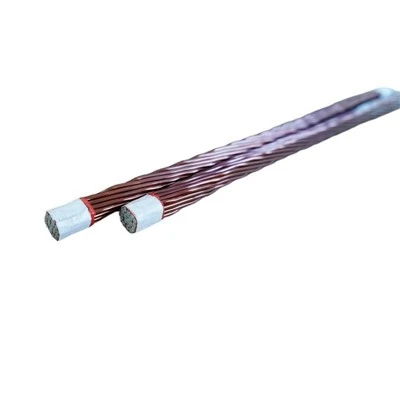
The future of aerospace is about making planes lighter, more efficient, and more reliable, and wiring is a huge part of that. Round wire served the industry well for decades, but enameled flat wire is the next step forward. It’s not a replacement—it’s an upgrade, tailored to the unique demands of high-altitude flight. I’m proud that my small company, which started in a garage in 2012, is now part of that progress, and I can’t wait to see what we build together next.
Wrapped Wire References:
- SAE International. (2018). SAE AS23519: Wire and Cable, Electrical, Insulated, For Aerospace. Warrendale, PA: SAE International.
- Federal Aviation Administration (FAA). (2020). Aerospace Wiring Systems Certification Guidelines. Washington, DC: U.S. Department of Transportation.
- European Aviation Safety Agency (EASA). (2021). Materials and Processes for Aircraft Wiring. Cologne, Germany: EASA.
- NASA. (2022). Satellite Wiring Efficiency Report: Flat vs. Round Wire for Low-Earth Orbit Missions. Washington, DC: National Aeronautics and Space Administration.
- Society of Automotive Engineers Aerospace Division. (2023). Vibration and Thermal Performance of Flat Wire for Aircraft Auxiliary Power Units. Warrendale, PA: SAE International.
Tianjin Jingwei Power Technology Co., Ltd.
As one of the most professional enameled flat wire manufacturers and suppliers in China, our products have good reputation in the market. We warmly welcome you to buy durable enameled flat wire for sale here from our factory. Good service and quality products are available.
Address: No.1 Chuangxin Rd. Xiaozhan Industrial Park, Jinnan District, Tianjin, China
E-mail: info@jwdc.cn
WebSite: https://www.jwdcs.com/
